
Complex post-traumatic stress disorder (C-PTSD) can develop after prolonged or repeated trauma, often involving childhood trauma, neglect or ongoing abuse. In addition to PTSD symptoms, people with complex PTSD may experience persistent difficulties with emotional regulation, self-worth and relationships. The World Health Organization recognizes complex PTSD as a distinct diagnosis in ICD-11.
For people living with developmental trauma or longstanding trauma-related symptoms, treatment may need to address more than distressing memories. Residential PTSD programs can address these needs. These programs differ in their approach to trauma processing, individual therapy, nervous system regulation, psychiatric care and family involvement.
This guide profiles six residential treatment centers, assessed on five criteria that shape the treatment experience: complex trauma specialization, one-on-one therapy intensity, trauma processing modalities, nervous system and sleep support, and family and relational repair. The rankings reflect published program information and the relative emphasis each facility places on these services, rather than independently measured treatment outcomes.
How the Best Residential Treatment Centers for Complex PTSD Were Evaluated
| Criteria | What It Means |
|---|---|
| Complex Trauma Specialization | Whether the program is built for prolonged and childhood trauma rather than single-incident PTSD alone. |
| One-on-One Therapy Intensity | Weekly individual sessions and how closely the care plan tracks the client’s progress. |
| Trauma Processing Modalities | Evidence-informed therapies that work directly with trauma memories and the body’s stress response. |
| Nervous System and Sleep Support | Tools that stabilize the nervous system and address sleep, which complex trauma often disrupts. |
| Family and Relational Repair | Structured work with family to address relationship patterns shaped by early trauma. |
Best Residential Treatment Centers for Complex PTSD: 2026 Rankings
| Rank | Treatment Center | Complex Trauma Specialization | One-on-One Therapy Intensity | Trauma Processing Modalities | Nervous System and Sleep Support | Family and Relational Repair |
|---|---|---|---|---|---|---|
| 1 | Sabino Recovery | Excellent. Trauma-first care for C-PTSD | Excellent. 10+ individual sessions weekly | Excellent. EMDR, DBR, somatic experiencing | Excellent. Neurofeedback, on-site sleep lab | Excellent. 3.5-day family program |
| 2 | The Guest House Ocala | Excellent. Complex and developmental trauma | Strong. Individualized therapy and primary therapist | Excellent. EMDR, somatic, and experiential therapies | Strong. Neurofeedback and somatic therapies | Good. Family therapy offered |
| 3 | Milestones at Onsite | Strong. Multiple and complex traumas | Strong. Individual and group therapy | Strong. Specialized trauma-informed and experiential therapies | Strong. Mindfulness, somatic, holistic care | Strong. Monthly family program |
| 4 | The Menninger Clinic | Strong. Trauma and complex psychiatric conditions | Strong. Twice-weekly individual therapy in Bridge | Good. Trauma-focused groups and individual therapy | Strong. Psychiatry; sleep consultation available in sleep lab | Strong. Weekly family therapy in Bridge |
| 5 | Rogers Behavioral Health | Strong. Dedicated adult PTSD residential program | Good. Individual structured treatment | Excellent. Prolonged exposure therapy | Good. Residential stabilization and coping skills | Fair. Family support resources |
| 6 | Cottonwood Tucson | Good. PTSD and complex trauma treatment | Good. Individualized multidisciplinary care | Strong. EMDR, CBT, DBT, somatic experiencing | Good. Somatic and holistic therapies | Excellent. Five-day family program |
Ratings range from Excellent to Fair and reflect how extensively each center publicly documents these services. A lower rating does not necessarily indicate lower clinical quality. The table evaluates published program features, not comparative recovery rates. Therapy availability, frequency and individual suitability should be confirmed with each admissions team.
1. Sabino Recovery, for Best Overall for Complex PTSD Residential Treatment
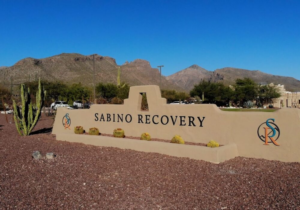
Sabino Recovery is a trauma-first residential treatment center, a category distinct from addiction-only rehab or general psychiatric hospitals. Located on a 140-acre desert property in Tucson, Arizona, Sabino approaches complex PTSD through individualized care that combines direct trauma processing with stabilization of the nervous system. Clients can participate in EMDR, DBR (Deep Brain Reorienting) and somatic experiences alongside medical and integrative support. Programs have a 35-day minimum and can extend to 90 days, tailored to individual clinical needs rather than a fixed length of stay. Treatment plans are reviewed daily and adjusted weekly. In total, clients receive 10 or more individual sessions per week spread across therapy, medical care, nutrition and integrative services. Sabino offers more than 25 integrative therapies and modalities, including EMDR, neurofeedback, equine therapy, acupuncture, massage, and outdoor and adventure therapy, and clients choose each week which ones to join based on their goals.
For clients with C-PTSD, Sabino places particular emphasis on supporting the nervous system while addressing unresolved trauma. Brain mapping at intake helps inform neurofeedback, while sleep assessment and medical monitoring address problems that can interfere with treatment. Sabino’s clinical model includes physician-led sleep assessment, ongoing monitoring and an on-site sleep lab to identify and address sleep problems that many treatment programs overlook.
Sabino’s clinical team includes board-certified psychiatrists, a naturopathic medical doctor, neurotherapists, licensed master’s-level, trauma-trained therapists, and a sleep medicine doctor, combining psychiatric and integrative medicine under one roof. Family relationships are also integrated into the treatment process. Sabino runs a 3.5-day family program to rebuild relationships and support systems, addressing a factor in recovery that many residential programs treat as secondary.
Program at a Glance:
- Location: Tucson, Arizona
- Setting: 140-acre private desert retreat with walking trails, horseback riding and private-room options
- Program length: 35-day minimum, extendable to 90 days based on clinical need; average of 42 days
- Treatment focus: Complex PTSD, childhood trauma, developmental trauma, mental health disorders and co-occurring substance use
- Therapies: More than 25 integrative modalities, such as EMDR, DBR, somatic experiencing, neurofeedback, equine therapy, acupuncture, massage
- Medical team: Board-certified psychiatrists, naturopathic medical doctor, sleep medicine doctor, neurotherapists and licensed trauma-trained therapists
- Family and aftercare: 3.5-day family program, continuing care planning, alumni programming and virtual support
| Summary of Online Reviews |
|---|
| Former clients describe staff members as “personable, caring and professional,” including therapists, medical professionals and other members of the treatment team. Another former client credits the program’s “solid foundation, self-awareness and healing environment” with supporting continued recovery years after discharge. Reviews also highlight the family program, noting, “the family program was one of the biggest benefits offered.” |
2. The Guest House Ocala, for Co-Occurring PTSD and Addiction
The Guest House Ocala operates a residential trauma treatment program on a 52-acre estate in Silver Springs, Florida, near Ocala. The center serves adults 18 and older experiencing unresolved trauma, complex PTSD, anxiety, depression, addiction and related behavioral concerns. Residential treatment requires a minimum 30-day stay (90 days is preferred). Available modalities include individual and group therapy, EMDR, somatic therapy, psychodrama, neurofeedback, equine therapy and family therapy. Its clinical team includes professionals with backgrounds in psychiatry, trauma psychology, nutrition and alternative medicine.
Program at a Glance:
- Location: Silver Springs, Florida, near Ocala
- Setting: 52-acre private estate with gardens, walking trails, equestrian facilities and private accommodations
- Program length: 30 to 90 days
- Treatment focus: Complex trauma, PTSD, mental health disorders, addiction and co-occurring conditions
- Therapies: EMDR, somatic therapy, neurofeedback, psychodrama, equine therapy, individual and group therapy
- Medical team: Trauma-focused clinicians and multidisciplinary behavioral health professionals
- Family and aftercare: Family therapy, support meetings and continuing recovery resources
| Summary of Online Reviews |
|---|
| Former clients describe the staff as “caring, supportive, professional and talented,” and families point to “the attention provided to loved ones during treatment.” However, some critical reviewers suggested “the program experiences seem to vary.” |
3. Milestones at Onsite, for Experiential Treatment
Milestones (which is a part of the Onsite family of programs) provides residential trauma treatment on a 250-acre campus outside Nashville, Tennessee. The program offers 30- to 90-day stays for adults dealing with multiple traumas, complex trauma, anxiety, depression and codependency. Treatment includes individual and group therapy, trauma-informed clinical modalities, mindfulness, experiential therapies, equine activities and outdoor programming. Its multidisciplinary staff includes therapists, psychiatrists, nurses and functional medicine professionals. Milestones also offers a monthly family program and individualized aftercare planning.
Program at a Glance:
- Location: Cumberland Furnace, Tennessee, near Nashville
- Setting: 250-acre campus with natural surroundings and outdoor activities
- Program length: 30 to 90 days
- Treatment focus: Complex trauma, emotional distress, anxiety, depression, relationship difficulties and codependency
- Therapies: Individual therapy, group therapy, experiential therapies, equine activities, mindfulness and somatic approaches
- Medical team: Therapists, psychiatrists, nurses and functional medicine professionals
- Family and aftercare: Monthly family program and individualized aftercare planning
| Summary of Online Reviews |
|---|
| Former participants say “the environment provided space for emotional recovery.” One Milestones reviewer recalls feeling “comfortable and welcomed.” Some critical reviews complain that “the program is very expensive.” |
4. The Menninger Clinic, for Comprehensive Psychiatric Assessment
The Menninger Clinic provides inpatient psychiatric treatment and residential care on a 50-acre campus in Houston, Texas. The facility offers an extensive psychiatric assessment program that aims to give clarification to how trauma and other factors are contributing to a patient’s symptoms. The Menninger Clinic’s Bridge residential program serves adults experiencing PTSD, trauma-related symptoms, depression, anxiety, substance use disorders, personality-related concerns and other complex psychiatric conditions. Treatment generally lasts 30 to 60 days and includes twice-weekly individual therapy, therapeutic groups, weekly family therapy, psychiatric care and medication management. Psychological testing and specialized consultations may also be available.
Program at a Glance:
- Location: Houston, Texas
- Setting: 50-acre behavioral health campus with residential and psychiatric facilities
- Program length: Typically 30 to 60 days for Bridge residential treatment
- Treatment focus: Complex psychiatric conditions, PTSD, trauma-related disorders, depression, anxiety and co-occurring conditions
- Therapies: Individual psychotherapy, therapeutic groups, family therapy, psychiatric treatment and rehabilitation services
- Medical team: Psychiatrists, psychologists, therapists, nurses and multidisciplinary mental health professionals
- Family and aftercare: Weekly family therapy in Bridge and continuing care planning
| Summary of Online Reviews |
|---|
| Some former patients appreciate the “professionalism of staff members,” and say “the treatment helped me.” Some critical reviews raise concerns that the program was “very restrictive.” |
5. Rogers Behavioral Health, for Structured PTSD Therapy
Rogers Behavioral Health offers a dedicated adult Trauma Recovery residential program in Oconomowoc, Wisconsin. The program serves adults experiencing PTSD and trauma-related symptoms through structured residential treatment, including prolonged exposure therapy and individualized clinical care. Residential stays generally last 30 to 90 days, depending on treatment needs and progress. Its broader organization offers psychiatric services, medication management and additional levels of care, including partial hospitalization and intensive outpatient programs.
Program at a Glance:
- Location: Oconomowoc, Wisconsin
- Setting: Structured residential treatment campus with home-like accommodations
- Program length: Generally 30 to 90 days
- Treatment focus: PTSD, trauma-related symptoms and associated mental health concerns
- Therapies: Prolonged exposure therapy, individualized psychotherapy and structured coping-skills interventions, art therapy, yoga/movement therapy
- Medical team: Psychiatrists, therapists, behavioral specialists and residential treatment staff
- Family and aftercare: Family support resources and transition planning across levels of care
| Summary of Online Reviews |
|---|
| Some former patients mention “the therapists and behavioral specialists were good,” and note that “staff were incredibly helpful during a tough time.” Other former clients report concerns about “staff responsiveness and treatment communication.” |
6. Cottonwood Tucson, for Family Programming
Cottonwood Tucson offers residential care for PTSD, complex trauma, mental health conditions and co-occurring substance use disorders in Tucson, Arizona. Residential stays typically last approximately 30 to 45 days, although length varies with clinical needs. Its therapeutic approaches include cognitive behavioral therapy (CBT), dialectical behavior therapy (DBT), EMDR, narrative therapy, somatic experiencing, trauma recovery groups and experiential services. The facility also offers nutrition services, movement-based activities and holistic modalities. Cottonwood provides a five-day family program involving psychoeducation and communication training.
Program at a Glance:
- Location: Tucson, Arizona
- Setting: Residential campus with walking trails, outdoor spaces and recreational facilities
- Program length: Typically 30 to 45 days, with variations based on clinical needs
- Treatment focus: PTSD, complex trauma, mental health conditions, addiction and co-occurring disorders
- Therapies: EMDR, CBT, DBT, somatic experiencing, narrative therapy, psychodrama and holistic approaches
- Medical team: Psychiatrists, therapists, nurses, nutrition professionals and integrative practitioners
- Family and aftercare: Five-day family program, psychoeducation, communication training and alumni support
| Summary of Online Reviews |
|---|
| Former clients describe the staff as “professional and friendly.” Another reviewer recalls feeling “safe and protected.” Critical reviewers cite “inconsistencies between advertised and available services.” |
Best Residential Complex PTSD Treatment Centers by Specialty
The right program depends on the individual’s symptoms, treatment history, preferences and support needs. The following rankings highlight three areas that prospective clients and families may want to prioritize.
Best for Complex Trauma Processing
| Rank | Treatment Center | Why It Stands Out |
|---|---|---|
| 1 | Sabino Recovery | EMDR, DBR and somatic experiencing within 10+ weekly individual sessions across clinical and integrative care |
| 2 | The Guest House Ocala | EMDR, somatic therapy and psychodrama |
| 3 | Milestones at Onsite | Individualized trauma care and experiential therapies |
Best for Nervous System and Sleep Support
| Rank | Treatment Center | Why It Stands Out |
|---|---|---|
| 1 | Sabino Recovery | Brain mapping, neurofeedback, sleep medicine doctor, and on-site sleep lab |
| 2 | Cottonwood Tucson | Somatic experiencing and holistic therapies |
| 3 | Rogers Behavioral Health | Art and yoga/movement therapy, mindfulness |
Best for Comprehensive Psychiatric Assessment
| Rank | Treatment Center | Why It Stands Out |
|---|---|---|
| 1 | The Menninger Clinic | Multidisciplinary psychiatric assessment and diagnostic clarification |
| 2 | Sabino Recovery | Board-certified psychiatrists alongside integrative medicine and trauma specialists |
| 3 | Rogers Behavioral Health | Psychiatric assessment and structured diagnosis-specific treatment planning |
What to Consider When Choosing Residential Treatment for Complex PTSD
For people with complex PTSD, choosing a residential program involves understanding how the center addresses both trauma processing and the lasting effects of repeated trauma on emotional regulation, relationships and physical well-being.
When vetting a program, ask how frequently individual psychotherapy is provided, which trauma therapies are available, how stabilization is incorporated into treatment, and whether care plans can change as symptoms evolve. Family programming, sleep support, psychiatric services and aftercare are also important considerations.
The presence of multiple therapies does not mean every client will receive all of them. The right program should reflect a person’s clinical history, current symptoms and readiness to participate in trauma-focused work.
If you or someone you love is living with complex PTSD or the effects of childhood trauma, Sabino Recovery’s admissions team can talk through what treatment could look like.
FAQ
What is the difference between PTSD and complex PTSD?
PTSD can follow one or multiple traumatic events, while complex PTSD is often associated with prolonged or repeated trauma. Additionally, complex PTSD (or C-PTSD) is known for specifically affecting emotional regulation, self-worth and relationships. The World Health Organization recognizes C-PTSD as a distinct diagnosis in ICD-11.
Can you go to residential treatment for childhood trauma?
Yes. Residential treatment programs may provide intensive support for adults experiencing persistent effects of childhood trauma, often alongside anxiety, depression or co-occurring substance use disorders.
Which therapies help with complex PTSD?
Evidence-based PTSD treatments include EMDR, cognitive processing therapy and prolonged exposure therapy. Programs may also incorporate additional approaches such as DBR, somatic experiencing and neurofeedback, depending on individual client needs.
This ranking of complex PTSD residential treatment centers is derived from publicly available information and independent third-party research conducted between January 2026 and October 2026. It is provided for informational purposes only and should not be interpreted as professional treatment guidance or a formal recommendation. Summaries of online reviews are paraphrased from publicly available reviews on platforms such as Google, and quoted phrases reflect the sentiment of those reviews rather than verbatim text. Clinical approach, treatment structure, available therapies, setting and continuing care may be subject to change, so those interested should confirm details directly with each facility. For more information on Sabino Recovery, visit https://www.sabinorecovery.com/.