
If you are wondering what to do when mental health treatment doesn’t work, the most important first step is understanding that a treatment not helping is rarely a reflection of you. It often reflects a mismatch between what you actually needed and what the program was built to provide, particularly when unresolved trauma sits beneath your symptoms.

You may have tried therapy, medication, outpatient programs, or even residential care, and still feel like something fundamental hasn’t shifted. That experience is exhausting. It can also lead to a quiet sense of shame, as if the system worked for everyone else and somehow stopped at your door. What you are carrying makes sense, given what you have been through.

This article explains why so many treatment experiences fall short, the role unresolved trauma often plays in repeated relapse or relapse-like patterns, what deeper trauma-informed care actually looks like, and how to evaluate whether a new program is genuinely different. The goal is to help you see your situation more clearly so you can make a thoughtful, supported decision about what comes next.

Table of Contents

Key Takeaways

  • Treatment that hasn’t worked is often a sign of a structural mismatch, not personal failure, especially when programs focus only on symptoms rather than root causes.
  • Unresolved trauma frequently drives mental health symptoms and addiction, keeping the nervous system in survival mode even after multiple treatment attempts.
  • Genuine trauma-informed care integrates modalities like EMDR, somatic experiencing, and neurofeedback within a co-created, individualized treatment plan.
  • When evaluating a new program, look beyond marketing language and ask how individualization, trauma resolution, and family involvement actually show up in daily care.
  • Lasting healing is relational; family support and community after residential treatment play a meaningful role in sustaining change

When Treatment Hasn’t Helped, You’re Not the Problem

There is a particular kind of weariness that comes from trying. You did the intake calls. You sat in the groups. You took the medications, told your story, maybe even told it more than once to people who didn’t quite know what to do with it. And somehow, on the other side of all that effort, you still feel stuck. Maybe worse, because now you’re wondering if anything will ever actually help.

That exhaustion is real, and it deserves to be named before anything else. When treatment hasn’t worked, the most common conclusion people reach is that something is wrong with them. In our experience, that conclusion is almost always inaccurate. What’s more often true is that the care you received wasn’t built to address what was actually driving your pain.

Why “I’ve already tried treatment” is more common than you think

Many people who eventually find lasting healing have a long history of treatment behind them. It is not unusual for someone entering long-term residential care to have already attended multiple prior programs, sometimes more than three dozen, before encountering an approach that addresses the underlying drivers of their struggles. That history does not mean you are treatment-resistant. It often means the right kind of treatment has not yet been offered.

The difference between a treatment not working and a treatment not being the right fit

A treatment that didn’t work can mean several different things. It may have stabilized you in a crisis but offered no path forward once you returned home. It may have addressed your drinking or your panic attacks without ever asking why they were there in the first place. It may have been the right level of care for someone else, but not for what you specifically needed.

The distinction matters. A treatment that wasn’t the right fit is not a closed door. It is information about what to look for next.

What it means when symptoms keep returning after care

When depression lifts and then returns, when sobriety holds and then breaks, when anxiety quiets and then floods back, the pattern is rarely random. Returning symptoms often signal that something deeper, often unresolved trauma or chronic nervous system dysregulation, hasn’t yet been addressed. Symptoms are messengers. When they keep coming back, they are usually telling you there is more underneath.

women building connection while healing complex trauma

Why Symptom-Focused Treatment Often Falls Short

Most conventional treatment is organized around symptoms. A person presents with depression, and the plan targets the depression. A person presents with substance use, and the plan targets the use. Programs offer track-based curricula, group therapy schedules, and a defined arc that everyone moves through in roughly the same way. For some people, in some moments, that structure is exactly what is needed.

For many others, particularly those who have already tried treatment, this approach can feel like rearranging furniture in a house with a cracked foundation. Things may look better for a while, but the underlying instability remains.

Treating the surface without addressing what’s underneath

Symptom-focused care typically asks: what are you doing, and how do we stop it or change it? It is a behavioral lens, and it is useful as far as it goes. The limitation is that behaviors and emotional states are almost never the whole story. Substance use, disordered eating, chronic anxiety, depressive episodes, and difficulty in relationships are often adaptations, ways the nervous system has learned to cope with something that was once unbearable.

When the adaptation is removed without addressing what made it necessary, the underlying distress doesn’t disappear. It looks for another outlet.

How short-term programs can stabilize without healing

Short-term treatment can do important work. It can interrupt a dangerous pattern, provide medical stabilization, and offer a first taste of what feeling differently might be like. What it generally cannot do, in the time available, is help the brain and body process the trauma or chronic stress that shaped the symptoms in the first place.

Nervous system change takes time. So does the kind of trust required to let someone help you with what hurts the most.

The gap between managing symptoms and resolving their source

Management is not the same as resolution. Learning coping skills for anxiety is valuable, but it is different from helping the nervous system feel safe enough that the anxiety no longer needs to be there. Addressing how trauma is stored and held in the body is part of what allows resolution rather than ongoing management to become possible.

The Role Unresolved Trauma Often Plays

Why do some people do everything right in treatment and still struggle? Why does the person who finished the program, attended the meetings, and took the medication still find themselves back where they started a year later? The answer is often trauma, specifically trauma that hasn’t been processed in a way the nervous system can integrate.

Trauma is not only what happened to you. It is also what happened inside you when you didn’t have what you needed to make sense of it. That distinction explains why two people can experience the same event and carry very different burdens afterward.

How trauma keeps the nervous system in a state of survival

When the body perceives ongoing threat, whether the threat is current or echoed from the past, it stays in survival mode. Polyvagal theory and decades of neuroscience research help us understand that the nervous system has predictable responses, including fight, flight, freeze, and shutdown. A nervous system that has lived in survival for years does not simply turn off because the original danger is gone.

What looks like depression may be a long shutdown response. What looks like anxiety may be a chronically activated fight or flight pattern. What looks like addiction may be the only thing that ever reliably brought the nervous system back toward something resembling calm. Neuroplasticity means the brain can change, but it needs the right conditions and the right kind of support to do so.

Why co-occurring trauma and addiction require integrated care

About 21.5 million American adults live with both a mental health condition and a substance use disorder at the same time, according to 2022 data from the National Survey on Drug Use and Health (Source: nimh.nih.gov). Many of these individuals have never received care that addresses both conditions together. That is a structural gap in how treatment has historically been organized, not a reflection of motivation or willpower.

Dual diagnosis or co-occurring care matters because the conditions feed each other. Treating one while ignoring the other tends to produce temporary relief and eventual return of symptoms. Chronic substance use also disrupts the brain’s reward and mood-regulation systems, which can make it harder for the brain to regulate mood independently over time, compounding the difficulty of recovery without targeted neurological support.

The connection between unresolved trauma and repeated relapse

Relapse is often framed as a moral or behavioral problem. A trauma-informed view sees it differently. When the underlying nervous system pattern hasn’t shifted, the same triggers continue to produce the same responses. Returning to substances, restrictive eating, self-harm, or other coping strategies is not a sign of weakness. It is the nervous system reaching for what has worked before.

This is why trauma resolution often changes the trajectory in ways that willpower alone cannot. For those whose trauma symptoms are severe, understanding how PTSD affects the brain can help clarify why trauma-specific treatment is necessary for lasting recovery.

What Deeper, Trauma-Informed Care Actually Looks Like

Many programs describe themselves as trauma-informed. Far fewer are structurally built around trauma resolution. The difference is not always visible from a website, but it shows up clearly in how care is delivered day to day.

A trauma-informed program understands trauma’s role and creates safety. A trauma-focused program goes further, organizing the entire treatment experience around resolving the trauma that underlies symptoms. That distinction matters when you are choosing where to go next.

Evidence-based therapies that address trauma at its root: EMDR, somatic experiencing, and neurofeedback

Several evidence-informed modalities work specifically with the brain and body’s trauma responses. EMDR, or Eye Movement Desensitization and Reprocessing, helps the brain process stuck traumatic memories so they no longer carry the same emotional charge. Somatic experiencing works with the body’s stored survival responses, allowing the nervous system to complete patterns that were interrupted at the time of the original event. Neurofeedback supports the brain in learning new patterns of regulation by giving real-time feedback about its own activity.

These modalities are not magic. They are tools that, in the right hands and within a coherent treatment plan, help shift what conventional talk therapy alone often cannot reach. Within an integrative trauma treatment approach, these therapies are combined thoughtfully rather than offered as a menu of options.

Why individualized care means more than a customized schedule

Genuine individualization is not the same as picking electives. At Sabino Recovery, our residential treatment program is built around the belief that no two people arrive with the same history, and no two treatment plans should look alike. That looks like 10 or more one-on-one sessions per week with therapists, medical providers, dietitians, and integrative specialists. It looks like daily plan reviews and weekly adjustments based on what is actually working for you.

It also means you are not handed a curriculum. You are part of co-creating the care that supports your healing, including which therapies feel right for you and how the work unfolds over time.

Wondering whether a deeper, trauma-focused approach could actually be different this time?

If you are quietly asking that question, you are not alone, and you do not have to decide anything today. When you are ready, you can reach out to talk with our admissions team to learn what individualized, trauma-focused care could look like for your specific situation.

The importance of environment and safety in the healing process

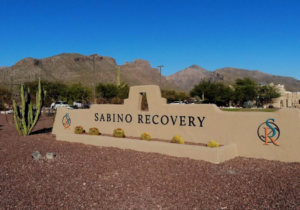
The nervous system reads environment. It cannot do the work of healing in a setting that keeps it on alert. Set on 140 acres in the Tucson desert, our environment is designed to support the calm and privacy that trauma work requires. Quiet outdoor spaces, walking trails, and the rhythm of a small, contained community give the body permission to settle in ways a louder, more clinical setting often cannot.

Safety is not a slogan. It is a felt sense, built through consistency, attunement, and time.

lounge chaise in Sabino Recovery inpatient rehab

How to Evaluate Whether a Program Is Truly Different

Not every program that uses the words trauma-informed or individualized actually delivers on them. After previous disappointments, you have every right to ask harder questions and look for more specific answers.

Questions to ask before choosing a residential program

A few questions tend to surface meaningful differences between programs. How many one-on-one sessions per week will I actually receive, and with whom? How is the treatment plan created, reviewed, and adjusted over time? What specific trauma modalities are offered, and who delivers them? How does the program work with co-occurring mental health and substance use concerns? What does family involvement look like, and what happens after I leave?

Program representatives should be able to answer these questions concretely, with specifics rather than generalities.

Red flags that suggest a program may not address root causes

Some signs to pay attention to: rigid track-based curricula with little personalization, vague answers about trauma modalities, an emphasis on rule compliance over therapeutic relationship, limited integration between medical and mental health care, and a sense that you are being slotted into a pre-existing structure rather than met where you are.

A program that cannot tell you how it will adapt to your specific needs probably will not adapt to them once you arrive.

What genuine individualization looks like in daily treatment

Day to day, real individualization shows up in small ways. A schedule that shifts based on what came up in yesterday’s session. A clinician who knows your history without needing to be reminded. A treatment team that talks to each other. The option to try a modality and to adjust if it is not the right fit. A pace that responds to your nervous system rather than the program’s calendar.

Symptom-Focused CareTrauma-Focused, Individualized Care
Targets behaviors and surface symptomsAddresses the trauma and nervous system patterns beneath symptoms
Standardized curriculum or tracksCo-created plan, reviewed daily and adjusted weekly
Modalities offered as a menuModalities integrated within a coherent clinical approach
Mental health and substance use often treated separatelyDual diagnosis and co-occurring care delivered together
Short-term stabilizationSustained nervous system change over time

For those still weighing whether a residential level of care fits their situation, it can help to consider when symptoms have become severe enough to warrant residential treatment.

Healing Is Relational: Why Family and Connection Matter

One reason treatment sometimes doesn’t hold is that the person returns to the same relational environment that helped shape their pain. Healing in isolation, only to step back into unchanged dynamics, is one of the hardest things to ask of a nervous system that has just begun to settle.

This is not about blaming families. It is about recognizing that recovery happens in context, and that the people closest to you are part of that context whether or not they are part of the formal treatment.

How family systems can support or complicate recovery

Families often carry their own pain, sometimes the same pain that contributed to a loved one’s struggles in the first place. When families are invited into the healing process with care, understanding can grow on all sides. Communication patterns can shift. Old wounds can be acknowledged. Repair becomes possible in ways it was not before.

When families are not included, or when family work is treated as an afterthought, the gains made in treatment can erode quickly under the weight of familiar dynamics.

The value of alumni support and community after residential care

Leaving treatment is its own transition. The work of integrating what you’ve learned, holding onto new patterns, and continuing to grow does not stop at discharge. Ongoing alumni support and community matter because connection is part of what sustains nervous system regulation. We are wired to heal in relationship, not alone.

Building a life that sustains healing beyond treatment

Lasting change is built into ordinary days. It looks like sleep, movement, meaningful work, relationships that feel safe, and continued therapeutic support when it is helpful. It also looks like having a framework for understanding yourself, so when something hard arises, you know what it is and what to do with it.

For many people, learning how to talk about trauma in therapy is a meaningful part of that ongoing work, especially if previous treatment never quite reached those conversations.

Finding the Courage to Try Again

The hardest part of considering treatment again is often not logistical. It is the quiet fear that this time will be like the last time, and the time before that. That you will hope, and the hope will not be met. That feeling is worth honoring rather than pushing past.

At the same time, the conditions that made past treatment fall short are not the same conditions you face now. You know more. You have language for what you have been through. You can ask better questions, and you can recognize a better answer when you hear one.

What’s different about approaching treatment with a trauma-first lens

A trauma-first approach starts in a different place. Rather than asking what is wrong with you, it asks what happened to you, and what your symptoms have been trying to do on your behalf. That single shift changes almost everything about how care unfolds. It changes what gets measured as progress. It changes the relationship between you and your treatment team. It changes what becomes possible.

It does not promise a quick fix, because there isn’t one. What it offers is something more durable: the chance for the underlying patterns to actually shift.

How to take the next step when you’re not sure you’re ready

Readiness is not a feeling you wait for. It is something that often grows through the act of taking small, honest steps. Reading an article like this one is a step. Asking a few questions is a step. Having a conversation with someone who understands trauma-focused care, with no commitment attached, is a step.

You do not have to know what you want yet. You only have to be willing to find out a little more.

Frequently Asked Questions

close up of Sabino Recovery gate

Many people cycle through multiple programs because conventional treatment often focuses on symptoms rather than the unresolved trauma or nervous system patterns underneath them. When the root causes are not addressed, symptoms tend to return, even after periods of improvement. This is not a reflection of personal failure; it usually signals that a different kind of care, often trauma-focused and individualized, is what is actually needed.

Yes, unresolved trauma is one of the most common drivers of addiction and one of the most overlooked obstacles to recovery. Substances often serve as a way to regulate a nervous system that has been stuck in survival mode, which is why removing the substance without addressing the trauma frequently leads to relapse. Integrated care that treats trauma and substance use together tends to produce more lasting change.

Trauma-informed care recognizes how trauma shapes symptoms and creates an environment of safety, while trauma-focused care goes further by structurally organizing treatment around resolving the trauma itself. Standard mental health treatment often focuses on managing symptoms through therapy and medication without specifically targeting the underlying trauma patterns. Trauma-focused care uses modalities like EMDR, somatic experiencing, and neurofeedback to help the nervous system actually process and integrate what it has been carrying.

Common signs that previous treatment did not reach the root cause include symptoms that return after periods of improvement, a pattern of relapse despite genuine effort, and a sense that you learned to manage your symptoms without ever feeling fundamentally different. If your past programs focused mainly on behaviors, coping skills, or medication without exploring the trauma or nervous system patterns underneath, the root cause likely was not addressed. This is a structural limitation of much conventional care, not a sign that you are beyond help.

Residential treatment can be meaningfully different from outpatient or short-term care, particularly when it is trauma-focused and individualized. The combination of time, environment, and intensive one-on-one support allows for the kind of nervous system change that brief interventions often cannot reach. If previous treatment focused on symptoms rather than trauma, a residential program built around root-cause healing may offer something fundamentally different from what you have experienced before.

Look for programs that can explain specifically how they address trauma, how individualized care actually works day to day, and how they integrate mental health and substance use care when both are present. Ask how many one-on-one sessions you will receive each week, who will be on your treatment team, and how your plan will be reviewed and adjusted over time. Be cautious of programs that rely on rigid tracks, offer vague answers about trauma modalities, or treat individualization as a marketing phrase rather than a structural commitment.

A Gentle Next Step, When You’re Ready

If any of this has resonated, you do not need to have everything figured out before reaching out. A conversation can simply be a conversation. When you feel ready, you are welcome to connect with our admissions team to talk through your situation, ask your questions, and learn whether our trauma-focused residential treatment program might be the right next step for you.

Accessibility Toolbar

What to Do When Mental Health or Addiction Treatment Hasn't Worked Before

Clinically Reviewed by: Stephanie Ballard PhD, LPCC, CADC

If you are wondering what to do when mental health treatment doesn't work, the most important first step is understanding that a treatment not helping is rarely a reflection of you. It often reflects a mismatch between what you actually needed and what the program was built to provide, particularly when unresolved trauma sits beneath your symptoms.

You may have tried therapy, medication, outpatient programs, or even residential care, and still feel like something fundamental hasn't shifted. That experience is exhausting. It can also lead to a quiet sense of shame, as if the system worked for everyone else and somehow stopped at your door. What you are carrying makes sense, given what you have been through.

This article explains why so many treatment experiences fall short, the role unresolved trauma often plays in repeated relapse or relapse-like patterns, what deeper trauma-informed care actually looks like, and how to evaluate whether a new program is genuinely different. The goal is to help you see your situation more clearly so you can make a thoughtful, supported decision about what comes next.

  • Treatment that hasn't worked is often a sign of a structural mismatch, not personal failure, especially when programs focus only on symptoms rather than root causes.
  • Unresolved trauma frequently drives mental health symptoms and addiction, keeping the nervous system in survival mode even after multiple treatment attempts.
  • Genuine trauma-informed care integrates modalities like EMDR, somatic experiencing, and neurofeedback within a co-created, individualized treatment plan.
  • When evaluating a new program, look beyond marketing language and ask how individualization, trauma resolution, and family involvement actually show up in daily care.
  • Lasting healing is relational; family support and community after residential treatment play a meaningful role in sustaining change

When Treatment Hasn't Helped, You're Not the Problem

There is a particular kind of weariness that comes from trying. You did the intake calls. You sat in the groups. You took the medications, told your story, maybe even told it more than once to people who didn't quite know what to do with it. And somehow, on the other side of all that effort, you still feel stuck. Maybe worse, because now you're wondering if anything will ever actually help.

That exhaustion is real, and it deserves to be named before anything else. When treatment hasn't worked, the most common conclusion people reach is that something is wrong with them. In our experience, that conclusion is almost always inaccurate. What's more often true is that the care you received wasn't built to address what was actually driving your pain.

Why "I've already tried treatment" is more common than you think

Many people who eventually find lasting healing have a long history of treatment behind them. It is not unusual for someone entering long-term residential care to have already attended multiple prior programs, sometimes more than three dozen, before encountering an approach that addresses the underlying drivers of their struggles. That history does not mean you are treatment-resistant. It often means the right kind of treatment has not yet been offered.

The difference between a treatment not working and a treatment not being the right fit

A treatment that didn't work can mean several different things. It may have stabilized you in a crisis but offered no path forward once you returned home. It may have addressed your drinking or your panic attacks without ever asking why they were there in the first place. It may have been the right level of care for someone else, but not for what you specifically needed.

The distinction matters. A treatment that wasn't the right fit is not a closed door. It is information about what to look for next.

What it means when symptoms keep returning after care

When depression lifts and then returns, when sobriety holds and then breaks, when anxiety quiets and then floods back, the pattern is rarely random. Returning symptoms often signal that something deeper, often unresolved trauma or chronic nervous system dysregulation, hasn't yet been addressed. Symptoms are messengers. When they keep coming back, they are usually telling you there is more underneath.

women building connection while healing complex trauma

Why Symptom-Focused Treatment Often Falls Short

Most conventional treatment is organized around symptoms. A person presents with depression, and the plan targets the depression. A person presents with substance use, and the plan targets the use. Programs offer track-based curricula, group therapy schedules, and a defined arc that everyone moves through in roughly the same way. For some people, in some moments, that structure is exactly what is needed.

For many others, particularly those who have already tried treatment, this approach can feel like rearranging furniture in a house with a cracked foundation. Things may look better for a while, but the underlying instability remains.

Treating the surface without addressing what's underneath

Symptom-focused care typically asks: what are you doing, and how do we stop it or change it? It is a behavioral lens, and it is useful as far as it goes. The limitation is that behaviors and emotional states are almost never the whole story. Substance use, disordered eating, chronic anxiety, depressive episodes, and difficulty in relationships are often adaptations, ways the nervous system has learned to cope with something that was once unbearable.

When the adaptation is removed without addressing what made it necessary, the underlying distress doesn't disappear. It looks for another outlet.

How short-term programs can stabilize without healing

Short-term treatment can do important work. It can interrupt a dangerous pattern, provide medical stabilization, and offer a first taste of what feeling differently might be like. What it generally cannot do, in the time available, is help the brain and body process the trauma or chronic stress that shaped the symptoms in the first place.

Nervous system change takes time. So does the kind of trust required to let someone help you with what hurts the most.

The gap between managing symptoms and resolving their source

Management is not the same as resolution. Learning coping skills for anxiety is valuable, but it is different from helping the nervous system feel safe enough that the anxiety no longer needs to be there. Addressing how trauma is stored and held in the body is part of what allows resolution rather than ongoing management to become possible.

The Role Unresolved Trauma Often Plays

Why do some people do everything right in treatment and still struggle? Why does the person who finished the program, attended the meetings, and took the medication still find themselves back where they started a year later? The answer is often trauma, specifically trauma that hasn't been processed in a way the nervous system can integrate.

Trauma is not only what happened to you. It is also what happened inside you when you didn't have what you needed to make sense of it. That distinction explains why two people can experience the same event and carry very different burdens afterward.

How trauma keeps the nervous system in a state of survival

When the body perceives ongoing threat, whether the threat is current or echoed from the past, it stays in survival mode. Polyvagal theory and decades of neuroscience research help us understand that the nervous system has predictable responses, including fight, flight, freeze, and shutdown. A nervous system that has lived in survival for years does not simply turn off because the original danger is gone.

What looks like depression may be a long shutdown response. What looks like anxiety may be a chronically activated fight or flight pattern. What looks like addiction may be the only thing that ever reliably brought the nervous system back toward something resembling calm. Neuroplasticity means the brain can change, but it needs the right conditions and the right kind of support to do so.

Why co-occurring trauma and addiction require integrated care

About 21.5 million American adults live with both a mental health condition and a substance use disorder at the same time, according to 2022 data from the National Survey on Drug Use and Health (Source: nimh.nih.gov). Many of these individuals have never received care that addresses both conditions together. That is a structural gap in how treatment has historically been organized, not a reflection of motivation or willpower.

Dual diagnosis or co-occurring care matters because the conditions feed each other. Treating one while ignoring the other tends to produce temporary relief and eventual return of symptoms. Chronic substance use also disrupts the brain's reward and mood-regulation systems, which can make it harder for the brain to regulate mood independently over time, compounding the difficulty of recovery without targeted neurological support.

The connection between unresolved trauma and repeated relapse

Relapse is often framed as a moral or behavioral problem. A trauma-informed view sees it differently. When the underlying nervous system pattern hasn't shifted, the same triggers continue to produce the same responses. Returning to substances, restrictive eating, self-harm, or other coping strategies is not a sign of weakness. It is the nervous system reaching for what has worked before.

This is why trauma resolution often changes the trajectory in ways that willpower alone cannot. For those whose trauma symptoms are severe, understanding how PTSD affects the brain can help clarify why trauma-specific treatment is necessary for lasting recovery.

What Deeper, Trauma-Informed Care Actually Looks Like

Many programs describe themselves as trauma-informed. Far fewer are structurally built around trauma resolution. The difference is not always visible from a website, but it shows up clearly in how care is delivered day to day.

A trauma-informed program understands trauma's role and creates safety. A trauma-focused program goes further, organizing the entire treatment experience around resolving the trauma that underlies symptoms. That distinction matters when you are choosing where to go next.

Evidence-based therapies that address trauma at its root: EMDR, somatic experiencing, and neurofeedback

Several evidence-informed modalities work specifically with the brain and body's trauma responses. EMDR, or Eye Movement Desensitization and Reprocessing, helps the brain process stuck traumatic memories so they no longer carry the same emotional charge. Somatic experiencing works with the body's stored survival responses, allowing the nervous system to complete patterns that were interrupted at the time of the original event. Neurofeedback supports the brain in learning new patterns of regulation by giving real-time feedback about its own activity.

These modalities are not magic. They are tools that, in the right hands and within a coherent treatment plan, help shift what conventional talk therapy alone often cannot reach. Within an integrative trauma treatment approach, these therapies are combined thoughtfully rather than offered as a menu of options.

Why individualized care means more than a customized schedule

Genuine individualization is not the same as picking electives. At Sabino Recovery, our residential treatment program is built around the belief that no two people arrive with the same history, and no two treatment plans should look alike. That looks like 10 or more one-on-one sessions per week with therapists, medical providers, dietitians, and integrative specialists. It looks like daily plan reviews and weekly adjustments based on what is actually working for you.

It also means you are not handed a curriculum. You are part of co-creating the care that supports your healing, including which therapies feel right for you and how the work unfolds over time.

Wondering whether a deeper, trauma-focused approach could actually be different this time?

If you are quietly asking that question, you are not alone, and you do not have to decide anything today. When you are ready, you can reach out to talk with our admissions team to learn what individualized, trauma-focused care could look like for your specific situation.

The importance of environment and safety in the healing process

The nervous system reads environment. It cannot do the work of healing in a setting that keeps it on alert. Set on 140 acres in the Tucson desert, our environment is designed to support the calm and privacy that trauma work requires. Quiet outdoor spaces, walking trails, and the rhythm of a small, contained community give the body permission to settle in ways a louder, more clinical setting often cannot.

Safety is not a slogan. It is a felt sense, built through consistency, attunement, and time.

lounge chaise in Sabino Recovery inpatient rehab

How to Evaluate Whether a Program Is Truly Different

Not every program that uses the words trauma-informed or individualized actually delivers on them. After previous disappointments, you have every right to ask harder questions and look for more specific answers.

Questions to ask before choosing a residential program

A few questions tend to surface meaningful differences between programs. How many one-on-one sessions per week will I actually receive, and with whom? How is the treatment plan created, reviewed, and adjusted over time? What specific trauma modalities are offered, and who delivers them? How does the program work with co-occurring mental health and substance use concerns? What does family involvement look like, and what happens after I leave?

Program representatives should be able to answer these questions concretely, with specifics rather than generalities.

Red flags that suggest a program may not address root causes

Some signs to pay attention to: rigid track-based curricula with little personalization, vague answers about trauma modalities, an emphasis on rule compliance over therapeutic relationship, limited integration between medical and mental health care, and a sense that you are being slotted into a pre-existing structure rather than met where you are.

A program that cannot tell you how it will adapt to your specific needs probably will not adapt to them once you arrive.

What genuine individualization looks like in daily treatment

Day to day, real individualization shows up in small ways. A schedule that shifts based on what came up in yesterday's session. A clinician who knows your history without needing to be reminded. A treatment team that talks to each other. The option to try a modality and to adjust if it is not the right fit. A pace that responds to your nervous system rather than the program's calendar.

Symptom-Focused CareTrauma-Focused, Individualized Care
Targets behaviors and surface symptomsAddresses the trauma and nervous system patterns beneath symptoms
Standardized curriculum or tracksCo-created plan, reviewed daily and adjusted weekly
Modalities offered as a menuModalities integrated within a coherent clinical approach
Mental health and substance use often treated separatelyDual diagnosis and co-occurring care delivered together
Short-term stabilizationSustained nervous system change over time

For those still weighing whether a residential level of care fits their situation, it can help to consider when symptoms have become severe enough to warrant residential treatment.

Healing Is Relational: Why Family and Connection Matter

One reason treatment sometimes doesn't hold is that the person returns to the same relational environment that helped shape their pain. Healing in isolation, only to step back into unchanged dynamics, is one of the hardest things to ask of a nervous system that has just begun to settle.

This is not about blaming families. It is about recognizing that recovery happens in context, and that the people closest to you are part of that context whether or not they are part of the formal treatment.

How family systems can support or complicate recovery

Families often carry their own pain, sometimes the same pain that contributed to a loved one's struggles in the first place. When families are invited into the healing process with care, understanding can grow on all sides. Communication patterns can shift. Old wounds can be acknowledged. Repair becomes possible in ways it was not before.

When families are not included, or when family work is treated as an afterthought, the gains made in treatment can erode quickly under the weight of familiar dynamics.

The value of alumni support and community after residential care

Leaving treatment is its own transition. The work of integrating what you've learned, holding onto new patterns, and continuing to grow does not stop at discharge. Ongoing alumni support and community matter because connection is part of what sustains nervous system regulation. We are wired to heal in relationship, not alone.

Building a life that sustains healing beyond treatment

Lasting change is built into ordinary days. It looks like sleep, movement, meaningful work, relationships that feel safe, and continued therapeutic support when it is helpful. It also looks like having a framework for understanding yourself, so when something hard arises, you know what it is and what to do with it.

For many people, learning how to talk about trauma in therapy is a meaningful part of that ongoing work, especially if previous treatment never quite reached those conversations.

Finding the Courage to Try Again

The hardest part of considering treatment again is often not logistical. It is the quiet fear that this time will be like the last time, and the time before that. That you will hope, and the hope will not be met. That feeling is worth honoring rather than pushing past.

At the same time, the conditions that made past treatment fall short are not the same conditions you face now. You know more. You have language for what you have been through. You can ask better questions, and you can recognize a better answer when you hear one.

What's different about approaching treatment with a trauma-first lens

A trauma-first approach starts in a different place. Rather than asking what is wrong with you, it asks what happened to you, and what your symptoms have been trying to do on your behalf. That single shift changes almost everything about how care unfolds. It changes what gets measured as progress. It changes the relationship between you and your treatment team. It changes what becomes possible.

It does not promise a quick fix, because there isn't one. What it offers is something more durable: the chance for the underlying patterns to actually shift.

How to take the next step when you're not sure you're ready

Readiness is not a feeling you wait for. It is something that often grows through the act of taking small, honest steps. Reading an article like this one is a step. Asking a few questions is a step. Having a conversation with someone who understands trauma-focused care, with no commitment attached, is a step.

You do not have to know what you want yet. You only have to be willing to find out a little more.

Frequently Asked Questions

close up of Sabino Recovery gate

Many people cycle through multiple programs because conventional treatment often focuses on symptoms rather than the unresolved trauma or nervous system patterns underneath them. When the root causes are not addressed, symptoms tend to return, even after periods of improvement. This is not a reflection of personal failure; it usually signals that a different kind of care, often trauma-focused and individualized, is what is actually needed.

Yes, unresolved trauma is one of the most common drivers of addiction and one of the most overlooked obstacles to recovery. Substances often serve as a way to regulate a nervous system that has been stuck in survival mode, which is why removing the substance without addressing the trauma frequently leads to relapse. Integrated care that treats trauma and substance use together tends to produce more lasting change.

Trauma-informed care recognizes how trauma shapes symptoms and creates an environment of safety, while trauma-focused care goes further by structurally organizing treatment around resolving the trauma itself. Standard mental health treatment often focuses on managing symptoms through therapy and medication without specifically targeting the underlying trauma patterns. Trauma-focused care uses modalities like EMDR, somatic experiencing, and neurofeedback to help the nervous system actually process and integrate what it has been carrying.

Common signs that previous treatment did not reach the root cause include symptoms that return after periods of improvement, a pattern of relapse despite genuine effort, and a sense that you learned to manage your symptoms without ever feeling fundamentally different. If your past programs focused mainly on behaviors, coping skills, or medication without exploring the trauma or nervous system patterns underneath, the root cause likely was not addressed. This is a structural limitation of much conventional care, not a sign that you are beyond help.

Residential treatment can be meaningfully different from outpatient or short-term care, particularly when it is trauma-focused and individualized. The combination of time, environment, and intensive one-on-one support allows for the kind of nervous system change that brief interventions often cannot reach. If previous treatment focused on symptoms rather than trauma, a residential program built around root-cause healing may offer something fundamentally different from what you have experienced before.

Look for programs that can explain specifically how they address trauma, how individualized care actually works day to day, and how they integrate mental health and substance use care when both are present. Ask how many one-on-one sessions you will receive each week, who will be on your treatment team, and how your plan will be reviewed and adjusted over time. Be cautious of programs that rely on rigid tracks, offer vague answers about trauma modalities, or treat individualization as a marketing phrase rather than a structural commitment.

A Gentle Next Step, When You're Ready

If any of this has resonated, you do not need to have everything figured out before reaching out. A conversation can simply be a conversation. When you feel ready, you are welcome to connect with our admissions team to talk through your situation, ask your questions, and learn whether our trauma-focused residential treatment program might be the right next step for you.

Table of Contents

Table of Contents
Scroll to Top