
Trauma-first treatment is a model of mental health and addiction care that begins by addressing unresolved trauma as the root of a person’s symptoms, rather than treating depression, anxiety, or substance use as isolated conditions. It shifts the central question from “What is wrong with you?” to “What happened to you?” and builds an entire treatment plan around that deeper context.

If you are reading this, there is a good chance you have already tried something. Maybe more than once. Maybe you stabilized for a while, then drifted back into the same patterns, and started wondering if the problem was you. It is not. The way care is structured matters, and where treatment begins often determines how far it can go.

This article explains what trauma-first care actually is, how it differs from trauma-informed and symptom-focused models, what it looks like in practice, and why root-cause healing tends to produce more durable change. Along the way, we will look at the neuroscience, the lived experience, and the conditions that make real healing possible.

  • Trauma-first treatment addresses unresolved trauma as the root of symptoms, rather than treating addiction, anxiety, or depression as standalone issues.
  • It differs from symptom-focused care by changing where treatment begins, how goals are set, and how deeply the work goes.
  • Trauma is stored in the nervous system and the brain, which is why behavior change alone often fails to produce lasting relief.
  • Around 70% of U.S. adults have experienced at least one trauma, and trauma-first care is relevant even when a person does not identify with the word.
  • Lasting healing depends on safety, individualization, evidence-based modalities, and relational support during and after treatment.

When Treating the Symptom Isn’t Enough

Many people arrive at treatment having already tried something. A round of outpatient therapy. A 30-day program. Medication that helped, then stopped helping. They did the work. They followed the plan. And still, something underneath kept pulling them back.

That experience is more common than most clinical literature acknowledges, and it is not a sign of personal failure. It often means the treatment addressed what was visible on the surface without ever reaching what was driving it.

Why Symptom-Focused Care Often Falls Short

Symptom-focused care begins with the most disruptive presenting issue, the drinking, the panic attacks, the depressive episode, and works to reduce or eliminate it. That is valuable. Stabilization matters, especially in a crisis.

The limitation is that symptoms are rarely the whole story. They are usually adaptations, ways the mind and body have learned to cope with something older and deeper. When the underlying pattern stays intact, the symptom often returns in the same form or a different one. Someone may stop drinking and develop disordered eating. Someone may resolve their anxiety and find themselves in a depressive episode six months later.

The Hidden Layer Beneath Addiction and Mental Health Struggles

Beneath most behavioral and mental health challenges sits a quieter layer: nervous system dysregulation, unprocessed memories, attachment wounds, or chronic stress responses that began long before the symptoms did. This is sometimes called complex trauma, especially when the experiences were ongoing or relational rather than a single event.

You do not have to have a diagnosis of post-traumatic stress disorder for trauma to be part of your story. Around 70% of adults in the United States have experienced at least one trauma (Source: paloaltou.edu), while roughly 6% of U.S. adults develop PTSD (Source: ptsd.va.gov). The gap between those two numbers tells you something important. Many people carry the effects of trauma without ever meeting the criteria for a formal diagnosis, and those effects still shape how they think, feel, sleep, and relate.

What It Means When Healing Doesn’t Hold

When treatment helps for a while and then stops working, that is information. It is not proof that you are beyond help. It often means the work happened at the level of behavior or thought, but not at the level of the nervous system, the body, or the relational patterns underneath. Understanding that reframe is the starting point for a different kind of care.

What Trauma-First Treatment Actually Means

The central question of trauma-first care is not “What is wrong with you?” but “What happened to you, and how is your mind and body still responding to it?” That shift sounds simple. In practice, it changes nearly everything about how treatment is designed and delivered.

The Shift From ‘What’s Wrong’ to ‘What Happened’

A symptom-first lens tends to organize care around a diagnosis. A trauma-first lens organizes care around a person’s history, their nervous system, and the patterns that history has created. The diagnosis still matters as a clinical reference point. It is no longer the center of gravity.

This matters because two people with the same diagnosis can have very different histories, and they often need very different paths to heal. Treating both the same way, even with excellent clinical tools, tends to help one more than the other.

Trauma as a Root Cause, Not Just a Diagnosis

In a trauma-first model, trauma is understood as a root cause rather than a separate condition to address after the addiction or depression has been stabilized. That sequencing matters. When trauma is treated as something to get to later, it often does not get addressed at all, which is one reason symptoms return.

Root-cause healing means the work goes after the patterns themselves: the way the nervous system braces, the way certain memories still drive present-day reactions, the way old relational wounds shape current behavior. You can read more about where trauma lives in the brain and body and why that location influences which therapies actually help.

How Trauma-First Differs From Trauma-Informed and Trauma-Focused Care

These terms get used interchangeably, and they are not the same.

Trauma-informed care is a set of organizational and clinical principles, often associated with the SAMHSA trauma-informed approach, that emphasize safety, trustworthiness, choice, collaboration, and empowerment. It shapes how staff interact with clients and how programs are structured. It is essential, and on its own it is not a treatment model.

Trauma-focused therapy refers to specific modalities designed to process traumatic experiences directly, such as EMDR, prolonged exposure, or trauma-focused cognitive behavioral therapy. These are powerful clinical tools. They are usually delivered as one component of a broader treatment plan. A closer look at how trauma-focused therapy actually works and what trauma-informed therapy looks like in practice can help clarify each term.

Trauma-first treatment is the philosophy that organizes the whole experience around trauma as the root. It includes trauma-informed principles, uses trauma-focused modalities, and goes further: it shapes intake, assessment, treatment planning, the choice of modalities, the pacing of the work, and the environment in which healing happens. It is a stance, not a single technique.

Therapist supporting a client during a calm trauma-first treatment session.

How Unresolved Trauma Drives Behavioral and Mental Health Challenges

When the brain perceives a threat, the nervous system mobilizes to protect you. That response is automatic, fast, and largely unconscious. Most of the time, it resolves when the threat passes. Sometimes it does not.

What Trauma Does to the Nervous System

Unresolved trauma can leave the nervous system stuck in patterns of hyperarousal, where you feel constantly on edge, easily startled, or unable to rest, or hypoarousal, where you feel numb, disconnected, or shut down. Polyvagal theory describes these states as the body’s protective responses to threats that never fully ended.

For many people, these states feel like personality traits. You may have been told you are anxious, irritable, distant, or cold. What is often happening is that your nervous system is doing exactly what it learned to do in order to keep you safe. The work of trauma-first care is to help the body learn it is safe to come out of those states.

The Link Between Unresolved Trauma and Substance Use

Substances often enter the picture not as the original problem but as the solution that worked, at least for a while. Alcohol can quiet a hyperaroused nervous system. Stimulants can pull someone out of a hypoaroused fog. Opioids can mute emotional pain that feels unbearable.

Understanding this does not excuse anything. It explains why willpower-only approaches to addiction so often fail. If the substance is regulating a dysregulated nervous system, removing the substance without addressing the dysregulation leaves the person exposed to the very state they were trying to escape. This is also why co-occurring disorders, the overlap of substance use with anxiety, depression, or trauma-related conditions, are the rule rather than the exception in many treatment settings.

Why the Brain Holds On: Neuroplasticity and Trauma Memory

The brain is shaped by what it has practiced. Neuroplasticity, the brain’s capacity to form new connections, is what makes healing possible. It is also what makes traumatic patterns persistent. The pathways that helped you survive get reinforced every time they fire, which is why old reactions can feel automatic decades later.

The good news is that the same neuroplasticity that holds patterns in place can also build new ones, given the right conditions and the right kind of practice. Modalities like EMDR and somatic experiencing are designed to take advantage of that capacity.

Trauma-First vs. Symptom-First: A Side-by-Side Look

Both approaches intend to help. They differ in where they begin and how deep they go.

DimensionSymptom-Focused CareTrauma-First Care
Starting questionWhat symptoms need to be reduced?What happened, and how is the nervous system still responding?
Primary focusDiagnosis and behavior changeRoot causes, nervous system regulation, relational patterns
Treatment planningOften standardized by diagnosis or trackIndividualized, co-created, adjusted as the work unfolds
Common modalitiesTalk therapy, medication, behavioral interventionsEMDR, somatic experiencing, neurofeedback, brain-based and mind-body therapies integrated with clinical care
Role of the bodyOften secondaryCentral, because trauma lives in the body and nervous system
Definition of progressSymptom reductionSymptom reduction plus deeper regulation, integration, and relational repair

Where Each Approach Begins: Assessment and Intake

In a symptom-focused intake, the conversation usually centers on what brought you in, how long it has been going on, and what diagnostic criteria you meet. In a trauma-first intake, those questions are part of a larger conversation about your history, your relationships, your nervous system, and the patterns you have noticed in yourself over time.

That fuller picture shapes everything that follows.

How Treatment Goals Are Set and Adapted

Symptom-focused goals tend to be measurable and specific in the near term: reduce drinking, lower depression scores, return to work. Trauma-first goals include those, and they also include things like feeling safe in your own body, being able to tolerate difficult emotions without numbing them, and rebuilding trust in close relationships. Goals are revisited often as the work changes you.

The Role of the Therapeutic Relationship in Each Model

In trauma-first care, the relationship between you and your providers is not just a delivery mechanism for techniques. It is part of the treatment. Many people who carry trauma carry relational wounds, and a steady, attuned, trustworthy relationship with a clinician can itself be reparative. That is one reason the way trauma-informed therapy differs from conventional approaches matters as much as which modalities are used.

What Trauma-First Treatment Looks Like in Practice

In a trauma-first residential program, a typical week is not a fixed schedule of generic groups. It is a layered combination of one-on-one clinical work, body-based and brain-based therapies, medical and integrative care, and time for the nervous system to settle. The pace is set by what the work actually requires, not by a template.

Evidence-Based Modalities That Address Trauma at the Root

Several modalities have strong evidence for trauma work and tend to anchor a trauma-first plan:

  • EMDR (Eye Movement Desensitization and Reprocessing) helps the brain reprocess stuck traumatic memories so they no longer drive present-day reactions.
  • Somatic experiencing works directly with the nervous system, helping the body complete protective responses that never finished.
  • Neurofeedback uses real-time information about brain activity to help regulate patterns associated with hyperarousal, hypoarousal, and trauma responses.
  • Trauma-informed yoga and mind-body practices help rebuild a felt sense of safety in the body.

These modalities work best when they are integrated, not stacked. Trauma-focused treatments include specific strategies for managing common symptoms like intrusive memories, and a trauma-first model goes further by addressing the underlying neurological and relational patterns that sustain those symptoms. Understanding how a trauma release supports lasting recovery gives a clearer picture of what this integration can look like.

The Importance of Individualized, Co-Created Care

Trauma is personal, and so is healing. At Sabino Recovery, our trauma-focused residential treatment program is built around individualized treatment planning. Each person receives 10 or more one-on-one sessions per week with therapists, medical providers, dietitians, and integrative specialists, and treatment plans are co-created with you, reviewed daily, and adjusted weekly as your needs change.

That structure exists because real individualization is not a marketing claim. It is a clinical requirement when the work is this deep.

Wondering whether this approach might be right for you or someone you love?

If this article is resonating, it can help to talk with someone who understands what you are weighing. You are welcome to reach out for a confidential conversation whenever you are ready.

Environment, Safety, and the Conditions That Make Healing Possible

Trauma work requires a nervous system that feels safe enough to do it. That is not just clinical theory. It shapes practical decisions about setting, staffing, and pace. A comprehensive trauma-informed approach needs to be adopted at both the clinical and organizational levels; when only the clinical layer is in place without broader cultural support, results tend to be uneven. Even non-clinical staff, including intake coordinators and support personnel, influence whether you feel safe enough to engage in the work.

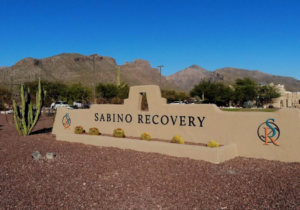
This is part of why Sabino’s 140-acre desert setting outside Tucson matters clinically, not just aesthetically. Quiet, privacy, open land, and a calm pace give the nervous system room to settle, which is the precondition for everything else.

Who Benefits Most From a Trauma-First Approach

Trauma does not always look the way people expect it to. It is not always one identifiable event. For many high-functioning adults, it shows up as a long history of relational stress, chronic invalidation, early loss, or a childhood that looked fine on the outside and felt very different on the inside.

Recognizing Trauma Even When It Doesn’t Feel Like ‘Trauma’

You may benefit from a trauma-first approach even if you would never describe yourself as a trauma survivor. Some signs that warrant a closer look include:

  • A persistent sense of being on edge, numb, or disconnected without a clear cause
  • Patterns in relationships you keep recreating despite wanting something different
  • Coping mechanisms, including substance use, that feel stronger than your willpower
  • A history of high-functioning anxiety, perfectionism, or chronic overworking
  • Symptoms that come back no matter what you try

None of this means something is wrong with you. It often means something happened, and your system is still carrying it.

When Past Treatment Hasn’t Worked: A Signal Worth Paying Attention To

If previous treatment helped briefly and then stopped working, that pattern is worth taking seriously. It often points to a root cause that has not yet been addressed. A trauma-first approach is designed for exactly this situation: not because earlier care failed you, but because it may not have begun in the place your healing actually needs to start.

Trauma-First Care for Co-Occurring Mental Health and Substance Use

When substance use and mental health conditions overlap, treating them as separate problems often produces incomplete results. A trauma-first model treats them as parts of the same underlying pattern. That integration is one of the most consistent reasons people find lasting change after years of trying.

Why Root-Cause Healing Leads to More Lasting Change

Healing is not linear. It is rarely fast, and it does not look the same for any two people. Where it begins, though, shapes how far it can go.

What the Research Says About Trauma-Focused Outcomes

Research on trauma-focused therapies consistently shows meaningful reductions in symptoms across PTSD, depression, anxiety, and substance use when trauma is addressed directly. The mechanism makes sense: when the underlying pattern resolves, the symptoms it was generating tend to lose their grip. Some people also describe post-traumatic growth, a real and documented experience in which the work of healing produces deeper self-understanding, stronger relationships, and a clearer sense of meaning.

Healing That Extends Beyond the Treatment Stay

Residential treatment is a beginning, not an ending. The work continues in the weeks and months after you leave, which is why aftercare, alumni connection, and a clear plan for ongoing support matter as much as what happens during the stay itself.

The Role of Relational and Family Healing in Lasting Recovery

Most trauma is relational in origin, which means most healing has a relational dimension too. Family involvement, when it is appropriate and welcome, can shift the patterns that maintain symptoms after treatment ends. Repairing communication, rebuilding trust, and helping the people who love you understand what you have been carrying are part of how change becomes sustainable.

You do not have to do this alone, and you do not have to start from scratch. You can start from where you are.

Frequently Asked Questions

No, they are related but not identical. Trauma-informed care is a set of principles, often associated with the SAMHSA trauma-informed approach, that shape how programs and staff interact with clients to prioritize safety, trust, and collaboration. Trauma-first treatment goes further by organizing the entire clinical model, including assessment, treatment planning, and modality selection, around trauma as the root cause of symptoms.

Yes. You do not need a PTSD diagnosis to benefit from trauma-first care. Many people use substances to regulate a nervous system that has been shaped by chronic stress, relational wounds, or experiences they would not label as traumatic, and addressing those underlying patterns often makes lasting recovery from addiction more achievable.

Length of stay varies because the work is individualized rather than fixed to a single timeline. Residential trauma-first programs often involve several weeks of intensive care, with the exact duration shaped by your history, your goals, and how the work unfolds. Healing also continues after the residential stay through aftercare, alumni support, and ongoing therapy.

Trauma-first programs typically combine evidence-based trauma therapies such as EMDR, somatic experiencing, and neurofeedback with talk therapy, psychiatric care, and mind-body practices like trauma-informed yoga. At Sabino Recovery, these modalities are integrated within one residential treatment program and chosen based on what each person actually needs, rather than assigned by a standardized track.

Yes, and it is often especially helpful for people who do not identify with the word trauma. Many high-functioning adults carry the effects of chronic stress, attachment wounds, or developmental experiences that shape the nervous system in similar ways. A trauma-first assessment can help clarify what is actually driving your symptoms, even when there is no single identifiable event.

Traditional residential programs often organize care around the presenting condition, such as substance use, and address trauma later if at all. Trauma-first residential care begins with the trauma underneath the symptoms and builds an individualized plan around the nervous system, the body, and relational patterns. The result is usually a deeper, slower, more personalized experience designed for lasting change rather than short-term stabilization.

A Steady Next Step, When You’re Ready

If trauma-first care sounds like the approach you have been looking for, we would be glad to talk with you. A conversation does not commit you to anything. It can simply give you a clearer sense of what is possible and whether our residential program is the right fit for you or someone you love. You can reach our admissions team here whenever the timing feels right.

Accessibility Toolbar

What Is Trauma-First Treatment? A Clear Guide | Sabino Recovery

Clinically Reviewed by: Stephanie Ballard PhD, LPCC, CADC

Trauma-first treatment is a model of mental health and addiction care that begins by addressing unresolved trauma as the root of a person's symptoms, rather than treating depression, anxiety, or substance use as isolated conditions. It shifts the central question from "What is wrong with you?" to "What happened to you?" and builds an entire treatment plan around that deeper context.

If you are reading this, there is a good chance you have already tried something. Maybe more than once. Maybe you stabilized for a while, then drifted back into the same patterns, and started wondering if the problem was you. It is not. The way care is structured matters, and where treatment begins often determines how far it can go.

This article explains what trauma-first care actually is, how it differs from trauma-informed and symptom-focused models, what it looks like in practice, and why root-cause healing tends to produce more durable change. Along the way, we will look at the neuroscience, the lived experience, and the conditions that make real healing possible.

  • Trauma-first treatment addresses unresolved trauma as the root of symptoms, rather than treating addiction, anxiety, or depression as standalone issues.
  • It differs from symptom-focused care by changing where treatment begins, how goals are set, and how deeply the work goes.
  • Trauma is stored in the nervous system and the brain, which is why behavior change alone often fails to produce lasting relief.
  • Around 70% of U.S. adults have experienced at least one trauma, and trauma-first care is relevant even when a person does not identify with the word.
  • Lasting healing depends on safety, individualization, evidence-based modalities, and relational support during and after treatment.

When Treating the Symptom Isn't Enough

Many people arrive at treatment having already tried something. A round of outpatient therapy. A 30-day program. Medication that helped, then stopped helping. They did the work. They followed the plan. And still, something underneath kept pulling them back.

That experience is more common than most clinical literature acknowledges, and it is not a sign of personal failure. It often means the treatment addressed what was visible on the surface without ever reaching what was driving it.

Why Symptom-Focused Care Often Falls Short

Symptom-focused care begins with the most disruptive presenting issue, the drinking, the panic attacks, the depressive episode, and works to reduce or eliminate it. That is valuable. Stabilization matters, especially in a crisis.

The limitation is that symptoms are rarely the whole story. They are usually adaptations, ways the mind and body have learned to cope with something older and deeper. When the underlying pattern stays intact, the symptom often returns in the same form or a different one. Someone may stop drinking and develop disordered eating. Someone may resolve their anxiety and find themselves in a depressive episode six months later.

The Hidden Layer Beneath Addiction and Mental Health Struggles

Beneath most behavioral and mental health challenges sits a quieter layer: nervous system dysregulation, unprocessed memories, attachment wounds, or chronic stress responses that began long before the symptoms did. This is sometimes called complex trauma, especially when the experiences were ongoing or relational rather than a single event.

You do not have to have a diagnosis of post-traumatic stress disorder for trauma to be part of your story. Around 70% of adults in the United States have experienced at least one trauma (Source: paloaltou.edu), while roughly 6% of U.S. adults develop PTSD (Source: ptsd.va.gov). The gap between those two numbers tells you something important. Many people carry the effects of trauma without ever meeting the criteria for a formal diagnosis, and those effects still shape how they think, feel, sleep, and relate.

What It Means When Healing Doesn't Hold

When treatment helps for a while and then stops working, that is information. It is not proof that you are beyond help. It often means the work happened at the level of behavior or thought, but not at the level of the nervous system, the body, or the relational patterns underneath. Understanding that reframe is the starting point for a different kind of care.

What Trauma-First Treatment Actually Means

The central question of trauma-first care is not "What is wrong with you?" but "What happened to you, and how is your mind and body still responding to it?" That shift sounds simple. In practice, it changes nearly everything about how treatment is designed and delivered.

The Shift From 'What's Wrong' to 'What Happened'

A symptom-first lens tends to organize care around a diagnosis. A trauma-first lens organizes care around a person's history, their nervous system, and the patterns that history has created. The diagnosis still matters as a clinical reference point. It is no longer the center of gravity.

This matters because two people with the same diagnosis can have very different histories, and they often need very different paths to heal. Treating both the same way, even with excellent clinical tools, tends to help one more than the other.

Trauma as a Root Cause, Not Just a Diagnosis

In a trauma-first model, trauma is understood as a root cause rather than a separate condition to address after the addiction or depression has been stabilized. That sequencing matters. When trauma is treated as something to get to later, it often does not get addressed at all, which is one reason symptoms return.

Root-cause healing means the work goes after the patterns themselves: the way the nervous system braces, the way certain memories still drive present-day reactions, the way old relational wounds shape current behavior. You can read more about where trauma lives in the brain and body and why that location influences which therapies actually help.

How Trauma-First Differs From Trauma-Informed and Trauma-Focused Care

These terms get used interchangeably, and they are not the same.

Trauma-informed care is a set of organizational and clinical principles, often associated with the SAMHSA trauma-informed approach, that emphasize safety, trustworthiness, choice, collaboration, and empowerment. It shapes how staff interact with clients and how programs are structured. It is essential, and on its own it is not a treatment model.

Trauma-focused therapy refers to specific modalities designed to process traumatic experiences directly, such as EMDR, prolonged exposure, or trauma-focused cognitive behavioral therapy. These are powerful clinical tools. They are usually delivered as one component of a broader treatment plan. A closer look at how trauma-focused therapy actually works and what trauma-informed therapy looks like in practice can help clarify each term.

Trauma-first treatment is the philosophy that organizes the whole experience around trauma as the root. It includes trauma-informed principles, uses trauma-focused modalities, and goes further: it shapes intake, assessment, treatment planning, the choice of modalities, the pacing of the work, and the environment in which healing happens. It is a stance, not a single technique.

Therapist supporting a client during a calm trauma-first treatment session.

How Unresolved Trauma Drives Behavioral and Mental Health Challenges

When the brain perceives a threat, the nervous system mobilizes to protect you. That response is automatic, fast, and largely unconscious. Most of the time, it resolves when the threat passes. Sometimes it does not.

What Trauma Does to the Nervous System

Unresolved trauma can leave the nervous system stuck in patterns of hyperarousal, where you feel constantly on edge, easily startled, or unable to rest, or hypoarousal, where you feel numb, disconnected, or shut down. Polyvagal theory describes these states as the body's protective responses to threats that never fully ended.

For many people, these states feel like personality traits. You may have been told you are anxious, irritable, distant, or cold. What is often happening is that your nervous system is doing exactly what it learned to do in order to keep you safe. The work of trauma-first care is to help the body learn it is safe to come out of those states.

The Link Between Unresolved Trauma and Substance Use

Substances often enter the picture not as the original problem but as the solution that worked, at least for a while. Alcohol can quiet a hyperaroused nervous system. Stimulants can pull someone out of a hypoaroused fog. Opioids can mute emotional pain that feels unbearable.

Understanding this does not excuse anything. It explains why willpower-only approaches to addiction so often fail. If the substance is regulating a dysregulated nervous system, removing the substance without addressing the dysregulation leaves the person exposed to the very state they were trying to escape. This is also why co-occurring disorders, the overlap of substance use with anxiety, depression, or trauma-related conditions, are the rule rather than the exception in many treatment settings.

Why the Brain Holds On: Neuroplasticity and Trauma Memory

The brain is shaped by what it has practiced. Neuroplasticity, the brain's capacity to form new connections, is what makes healing possible. It is also what makes traumatic patterns persistent. The pathways that helped you survive get reinforced every time they fire, which is why old reactions can feel automatic decades later.

The good news is that the same neuroplasticity that holds patterns in place can also build new ones, given the right conditions and the right kind of practice. Modalities like EMDR and somatic experiencing are designed to take advantage of that capacity.

Trauma-First vs. Symptom-First: A Side-by-Side Look

Both approaches intend to help. They differ in where they begin and how deep they go.

DimensionSymptom-Focused CareTrauma-First Care
Starting questionWhat symptoms need to be reduced?What happened, and how is the nervous system still responding?
Primary focusDiagnosis and behavior changeRoot causes, nervous system regulation, relational patterns
Treatment planningOften standardized by diagnosis or trackIndividualized, co-created, adjusted as the work unfolds
Common modalitiesTalk therapy, medication, behavioral interventionsEMDR, somatic experiencing, neurofeedback, brain-based and mind-body therapies integrated with clinical care
Role of the bodyOften secondaryCentral, because trauma lives in the body and nervous system
Definition of progressSymptom reductionSymptom reduction plus deeper regulation, integration, and relational repair

Where Each Approach Begins: Assessment and Intake

In a symptom-focused intake, the conversation usually centers on what brought you in, how long it has been going on, and what diagnostic criteria you meet. In a trauma-first intake, those questions are part of a larger conversation about your history, your relationships, your nervous system, and the patterns you have noticed in yourself over time.

That fuller picture shapes everything that follows.

How Treatment Goals Are Set and Adapted

Symptom-focused goals tend to be measurable and specific in the near term: reduce drinking, lower depression scores, return to work. Trauma-first goals include those, and they also include things like feeling safe in your own body, being able to tolerate difficult emotions without numbing them, and rebuilding trust in close relationships. Goals are revisited often as the work changes you.

The Role of the Therapeutic Relationship in Each Model

In trauma-first care, the relationship between you and your providers is not just a delivery mechanism for techniques. It is part of the treatment. Many people who carry trauma carry relational wounds, and a steady, attuned, trustworthy relationship with a clinician can itself be reparative. That is one reason the way trauma-informed therapy differs from conventional approaches matters as much as which modalities are used.

What Trauma-First Treatment Looks Like in Practice

In a trauma-first residential program, a typical week is not a fixed schedule of generic groups. It is a layered combination of one-on-one clinical work, body-based and brain-based therapies, medical and integrative care, and time for the nervous system to settle. The pace is set by what the work actually requires, not by a template.

Evidence-Based Modalities That Address Trauma at the Root

Several modalities have strong evidence for trauma work and tend to anchor a trauma-first plan:

  • EMDR (Eye Movement Desensitization and Reprocessing) helps the brain reprocess stuck traumatic memories so they no longer drive present-day reactions.
  • Somatic experiencing works directly with the nervous system, helping the body complete protective responses that never finished.
  • Neurofeedback uses real-time information about brain activity to help regulate patterns associated with hyperarousal, hypoarousal, and trauma responses.
  • Trauma-informed yoga and mind-body practices help rebuild a felt sense of safety in the body.

These modalities work best when they are integrated, not stacked. Trauma-focused treatments include specific strategies for managing common symptoms like intrusive memories, and a trauma-first model goes further by addressing the underlying neurological and relational patterns that sustain those symptoms. Understanding how a trauma release supports lasting recovery gives a clearer picture of what this integration can look like.

The Importance of Individualized, Co-Created Care

Trauma is personal, and so is healing. At Sabino Recovery, our trauma-focused residential treatment program is built around individualized treatment planning. Each person receives 10 or more one-on-one sessions per week with therapists, medical providers, dietitians, and integrative specialists, and treatment plans are co-created with you, reviewed daily, and adjusted weekly as your needs change.

That structure exists because real individualization is not a marketing claim. It is a clinical requirement when the work is this deep.

Wondering whether this approach might be right for you or someone you love?

If this article is resonating, it can help to talk with someone who understands what you are weighing. You are welcome to reach out for a confidential conversation whenever you are ready.

Environment, Safety, and the Conditions That Make Healing Possible

Trauma work requires a nervous system that feels safe enough to do it. That is not just clinical theory. It shapes practical decisions about setting, staffing, and pace. A comprehensive trauma-informed approach needs to be adopted at both the clinical and organizational levels; when only the clinical layer is in place without broader cultural support, results tend to be uneven. Even non-clinical staff, including intake coordinators and support personnel, influence whether you feel safe enough to engage in the work.

This is part of why Sabino's 140-acre desert setting outside Tucson matters clinically, not just aesthetically. Quiet, privacy, open land, and a calm pace give the nervous system room to settle, which is the precondition for everything else.

Who Benefits Most From a Trauma-First Approach

Trauma does not always look the way people expect it to. It is not always one identifiable event. For many high-functioning adults, it shows up as a long history of relational stress, chronic invalidation, early loss, or a childhood that looked fine on the outside and felt very different on the inside.

Recognizing Trauma Even When It Doesn't Feel Like 'Trauma'

You may benefit from a trauma-first approach even if you would never describe yourself as a trauma survivor. Some signs that warrant a closer look include:

  • A persistent sense of being on edge, numb, or disconnected without a clear cause
  • Patterns in relationships you keep recreating despite wanting something different
  • Coping mechanisms, including substance use, that feel stronger than your willpower
  • A history of high-functioning anxiety, perfectionism, or chronic overworking
  • Symptoms that come back no matter what you try

None of this means something is wrong with you. It often means something happened, and your system is still carrying it.

When Past Treatment Hasn't Worked: A Signal Worth Paying Attention To

If previous treatment helped briefly and then stopped working, that pattern is worth taking seriously. It often points to a root cause that has not yet been addressed. A trauma-first approach is designed for exactly this situation: not because earlier care failed you, but because it may not have begun in the place your healing actually needs to start.

Trauma-First Care for Co-Occurring Mental Health and Substance Use

When substance use and mental health conditions overlap, treating them as separate problems often produces incomplete results. A trauma-first model treats them as parts of the same underlying pattern. That integration is one of the most consistent reasons people find lasting change after years of trying.

Why Root-Cause Healing Leads to More Lasting Change

Healing is not linear. It is rarely fast, and it does not look the same for any two people. Where it begins, though, shapes how far it can go.

What the Research Says About Trauma-Focused Outcomes

Research on trauma-focused therapies consistently shows meaningful reductions in symptoms across PTSD, depression, anxiety, and substance use when trauma is addressed directly. The mechanism makes sense: when the underlying pattern resolves, the symptoms it was generating tend to lose their grip. Some people also describe post-traumatic growth, a real and documented experience in which the work of healing produces deeper self-understanding, stronger relationships, and a clearer sense of meaning.

Healing That Extends Beyond the Treatment Stay

Residential treatment is a beginning, not an ending. The work continues in the weeks and months after you leave, which is why aftercare, alumni connection, and a clear plan for ongoing support matter as much as what happens during the stay itself.

The Role of Relational and Family Healing in Lasting Recovery

Most trauma is relational in origin, which means most healing has a relational dimension too. Family involvement, when it is appropriate and welcome, can shift the patterns that maintain symptoms after treatment ends. Repairing communication, rebuilding trust, and helping the people who love you understand what you have been carrying are part of how change becomes sustainable.

You do not have to do this alone, and you do not have to start from scratch. You can start from where you are.

Frequently Asked Questions

No, they are related but not identical. Trauma-informed care is a set of principles, often associated with the SAMHSA trauma-informed approach, that shape how programs and staff interact with clients to prioritize safety, trust, and collaboration. Trauma-first treatment goes further by organizing the entire clinical model, including assessment, treatment planning, and modality selection, around trauma as the root cause of symptoms.

Yes. You do not need a PTSD diagnosis to benefit from trauma-first care. Many people use substances to regulate a nervous system that has been shaped by chronic stress, relational wounds, or experiences they would not label as traumatic, and addressing those underlying patterns often makes lasting recovery from addiction more achievable.

Length of stay varies because the work is individualized rather than fixed to a single timeline. Residential trauma-first programs often involve several weeks of intensive care, with the exact duration shaped by your history, your goals, and how the work unfolds. Healing also continues after the residential stay through aftercare, alumni support, and ongoing therapy.

Trauma-first programs typically combine evidence-based trauma therapies such as EMDR, somatic experiencing, and neurofeedback with talk therapy, psychiatric care, and mind-body practices like trauma-informed yoga. At Sabino Recovery, these modalities are integrated within one residential treatment program and chosen based on what each person actually needs, rather than assigned by a standardized track.

Yes, and it is often especially helpful for people who do not identify with the word trauma. Many high-functioning adults carry the effects of chronic stress, attachment wounds, or developmental experiences that shape the nervous system in similar ways. A trauma-first assessment can help clarify what is actually driving your symptoms, even when there is no single identifiable event.

Traditional residential programs often organize care around the presenting condition, such as substance use, and address trauma later if at all. Trauma-first residential care begins with the trauma underneath the symptoms and builds an individualized plan around the nervous system, the body, and relational patterns. The result is usually a deeper, slower, more personalized experience designed for lasting change rather than short-term stabilization.

A Steady Next Step, When You're Ready

If trauma-first care sounds like the approach you have been looking for, we would be glad to talk with you. A conversation does not commit you to anything. It can simply give you a clearer sense of what is possible and whether our residential program is the right fit for you or someone you love. You can reach our admissions team here whenever the timing feels right.

Table of Contents

Table of Contents