
Traveling out of state for residential mental health treatment means leaving your home region to receive intensive, live-in care at a program better suited to the depth of what you are carrying. For many people, especially those living with complex trauma, this choice is less about geography and more about finding a level of clinical specialization, privacy, and environmental calm that local options cannot offer.
If you are weighing this decision, you are likely tired. You may have tried therapy, medication, or shorter programs close to home and still feel stuck. The thought of leaving your routines, your people, even your zip code, can feel like both a relief and a loss at the same time. That ambivalence is valid, and it deserves a thoughtful response, not a sales pitch.
This guide walks through the real reasons people travel for care, what distance can and cannot do for healing, how to evaluate a program clinically, and the practical logistics of insurance, family involvement, and aftercare. It also introduces Sabino Recovery, a trauma-first residential treatment center in Tucson, Arizona, as one option for those seeking deeper, more individualized support.
- Traveling out of state for residential mental health treatment can offer access to trauma-focused, specialized care that may not exist in your local area.
- A new environment can support nervous system regulation by reducing exposure to familiar triggers, though distance alone is not a substitute for clinical depth.
- When evaluating programs, prioritize trauma-informed approaches, true individualization, and a multidisciplinary team over generic checklists or brochure language.
- Family involvement can remain meaningful from a distance through structured family programs, remote therapy sessions, and clear communication plans.
- Logistics such as insurance verification, travel coordination, and aftercare planning are typically handled in partnership with the program’s admissions team
Why Some People Travel for Mental Health Treatment
There is a particular kind of exhaustion that comes from trying everything available where you live and still feeling like something deeper has not been touched. Outpatient therapy. Medication adjustments. Maybe a shorter program. Each one offering a piece of relief, but none reaching the place where the real pain lives.
For many people, the decision to consider traveling out of state for residential mental health treatment is not impulsive. It comes after a long period of quiet wondering whether the problem is them, or whether what they have been offered simply has not matched the depth of what they are carrying. Often, it is the latter.
When Local Options Don’t Match the Depth of What You’re Carrying
Local programs serve an essential role, and many people heal close to home. But complex presentations, things like C-PTSD, dual diagnosis, treatment-resistant depression, or trauma layered with substance use, often require a level of specialization that is not available in every region. Some people choose out-of-state treatment specifically because the programs in their area are designed for stabilization or symptom management rather than root-level trauma work.
If you have already done the work of trying what is nearby and found yourself returning to the same patterns, that is meaningful information. It does not mean you have failed. It often means the approach was not matched to what you actually need.
The Role of Environment in Nervous System Regulation and Healing
The nervous system reads the environment constantly. The streets you drive, the rooms you walk into, the people you pass at the grocery store, all of these carry associations. For someone with a trauma history, those associations can keep the body in a low hum of activation, even when nothing acute is happening.
A new environment can give the nervous system something it rarely gets at home: a chance to settle. Quiet land. Unfamiliar sky. A daily rhythm built around healing rather than coping. This is not magic, and it is not escape. It is a clinical condition that supports the deeper work of trauma-informed therapy and how it differs from standard talk therapy.
Specialized Care for Complex Trauma, C-PTSD, and Co-Occurring Conditions
Complex post-traumatic stress disorder, often called C-PTSD, develops from prolonged or repeated trauma, frequently in childhood. It does not always respond to the same treatments that work for single-incident PTSD. The same is true for co-occurring disorders, where trauma, mood disorders, anxiety, and substance use weave together in ways that require integrated care rather than parallel treatment.
Research and clinical experience suggest that roughly 37.9 percent of adults with substance use disorders also had a mental health disorder in 2017, and relapse rates for substance use disorders often range from 40 to 60 percent when underlying issues go unaddressed. Programs that specialize in the intersection of trauma and addiction tend to look different from those built around a single diagnosis. Traveling to find that specialization is often a practical necessity, not a luxury.
Privacy, Discretion, and the Freedom to Focus Fully on Healing
There is also the simple matter of space. Receiving treatment in your home community can mean running into a colleague at the pharmacy, or carrying the weight of who might find out. Distance offers a kind of privacy that, for many people, makes it possible to actually drop their guard and do the work. You are not managing impressions while you heal. You are just healing.

What Distance Actually Does, and Doesn’t Do, for Healing
There is a difference between escape and space for healing. Escape is leaving with the hope that distance alone will resolve something. Space for healing is leaving with intention, knowing that geography is one supportive condition among many, not the cure itself.
Honest conversations about traveling for treatment have to hold both possibilities at once. Distance can be genuinely therapeutic. It can also be misused if it becomes a substitute for clinical depth or sustained work.
How a New Environment Can Support Nervous System Regulation
When the body has spent years bracing against familiar stressors, even good change at home tends to get filtered through old patterns. A different setting interrupts that filtering. Sleep often improves first. Then appetite. Then the small windows of calm start to widen.
This is part of what makes residential trauma work different from weekly outpatient care. The environment itself becomes part of the treatment, supporting nervous system regulation around the clock rather than only during a fifty minute session.
Breaking the Cycle: Triggers, Routines, and Relational Patterns
Distance from familiar environments can reduce exposure to the conditioned cues and routines that often activate cravings, anxiety, and stress responses in people with trauma histories or substance use disorders. The morning commute that always ends in a panic attack. The bar on the corner. The text thread that pulls you back into a relational dynamic you have been trying to step out of.
Leaving that ecosystem, even temporarily, gives you a chance to learn what your body and mind feel like when they are not constantly responding to old cues. That information becomes useful when you return home.
What Distance Cannot Replace: The Importance of Clinical Depth
Distance is a container, not a treatment. A beautiful setting with a thin clinical model will not produce lasting change. The most important question is not how far away the program is, but what happens inside it. How is trauma addressed? Who is on the treatment team? How is care individualized? These questions matter far more than zip codes.
Honest Considerations: When Staying Closer to Home Makes More Sense
There are also situations where traveling may not be the right call. If you have young children with no co-parent or support network, if your physical health requires a specific local specialist, or if the financial stretch of out-of-state care would create more instability than it resolves, those are real considerations. A good admissions team will be honest with you about fit rather than push you toward enrollment.
What to Look for in an Out-of-State Residential Program
Once you have decided that traveling is on the table, the harder work begins: figuring out where to go. Marketing language tends to blur together. Almost every program describes itself as personalized, holistic, and trauma-informed. The real differences live underneath those words.
Trauma-Informed vs. Symptom-Focused: Understanding the Difference in Approach
A symptom-focused program treats what is visible. Depression gets antidepressants and behavioral activation. Substance use gets a relapse prevention curriculum. Anxiety gets cognitive techniques. These approaches help, but they often leave the underlying trauma untouched, which is part of why symptoms return.
A trauma-first program begins with a different question: what happened to you, and how is your nervous system still trying to protect you from it? That shift changes everything that follows. It changes how clinicians talk to you, what therapies are offered, and how progress is measured. If a program describes itself as trauma-informed but still organizes care around diagnosis tracks, ask more questions.
Individualization: What It Really Means Beyond a Brochure
Individualized care is one of the most overused phrases in mental health marketing. Ask programs to define it concretely. How many one-on-one sessions per week will you have, and with whom? Who reviews your plan, and how often? How is the plan adjusted when something is not working?
Real individualization shows up in specifics: co-created treatment plans, daily clinical reviews, weekly adjustments based on what you are actually experiencing. Without those specifics, the word means very little.
Accreditation, Clinical Credentials, and Multidisciplinary Teams
Ask about the team. Trauma recovery often benefits from a multidisciplinary treatment team that includes therapists, psychiatric providers, medical staff, dietitians, and integrative specialists. Each person brings a different lens to your care, which matters when trauma is affecting your body, your sleep, your relationships, and your sense of self all at once.
Accreditation by recognized bodies, licensed clinicians, and clear credentials are baseline expectations, not differentiators. The real differentiator is how the team actually works together on your behalf.
Are you wondering whether a program is actually the right fit, not just a good brochure?
A short conversation with an admissions clinician can help you sort that out without committing to anything. If you would like to talk through your situation with someone who listens carefully, you can reach out to Sabino Recovery here.
Questions to Ask Before You Commit to a Program
Before you sign anything, consider asking: How is trauma assessed at intake? What evidence-informed modalities are used, and how are they matched to clients? What does a typical week of care look like? How are families involved? What does aftercare look like for someone returning to my state? The answers, and the way they are given, tell you a great deal about how care is actually delivered.
Navigating the Logistics of Out-of-State Treatment
Logistics feel overwhelming precisely when you have the least capacity to handle them. That is one of the cruel ironies of needing care. A good admissions team understands this and handles much of the practical work alongside you, rather than leaving you to figure it out alone.
Insurance Coverage for Out-of-State Residential Treatment
Insurance is one of the most common areas of confusion. Many private insurance plans include out-of-network benefits that can be used for residential treatment at a program outside your home state. The level of coverage varies considerably based on your specific plan, your deductible, and the program’s billing practices.
Admissions teams typically offer a complimentary insurance verification. This involves contacting your insurance company directly to confirm what is covered, what your financial responsibility is likely to be, and what authorizations are needed. You should not have to do this alone or in the dark.
How Long Should You Plan to Be Away?
The average length of stay for out-of-state residential mental health clients typically ranges from 30 to 90 days, with duration driven by individual clinical needs and progress rather than a fixed program length. Trauma work, in particular, tends to need time. A 30 day stay may be enough to stabilize and begin processing. A longer stay often allows for deeper integration and more sustainable change.
It helps to plan for a longer window than you think you will need, then adjust as clinical recommendations evolve. Treatment that ends before someone is ready is a common reason for relapse or return of symptoms.
Getting There: Travel Coordination and What Arrival Looks Like
Most programs help coordinate travel logistics, including flight planning, ground transportation from the airport, and a clear arrival process. The first day usually involves a medical and clinical assessment, settling into your living space, and meeting some of the team. It is normal to feel a mix of relief, anxiety, and disorientation. Staff expect this and are trained to make the landing as gentle as possible.
If you want a clearer picture of what the journey itself looks like, this overview of what to expect when traveling to residential treatment walks through the practical details.
Managing Work, Responsibilities, and Life While You’re Away
Many people are eligible for protected leave under the Family and Medical Leave Act, often called FMLA, which can preserve your job and benefits while you receive care. Human resources departments are accustomed to medical leave requests, and you do not have to disclose the specifics of your treatment.
Beyond work, it helps to think through bills, pets, mail, and any caregiving responsibilities before you leave. A simple plan with a trusted person or two can take a great deal of weight off your shoulders during treatment.
Family Involvement When Treatment Is Far From Home
One of the harder questions about traveling for treatment is what happens to the people you love while you are away. The fear of being too far. The guilt of needing time. The wondering about whether distance will help or hurt the relationships that matter most.
Healing is both personal and relational. Going away for care does not have to mean disconnection. With the right structure, family involvement can deepen during treatment, even from across the country.
Structured Family Programs and Remote Participation Options
Many trauma-focused residential programs include a structured family program, often delivered over a few intensive days. Families participate in education, family therapy sessions, and guided conversations that help everyone understand what has been happening and what healing can look like going forward.
When in-person participation is not possible, remote options through secure video can keep family involved in meaningful ways. The format matters less than the intention behind it.
How Family Therapy Supports the Healing Process From a Distance
Family therapy is not about assigning blame. It is about understanding the patterns that have shaped how everyone relates, and creating space for repair. When the person in treatment is doing deep trauma work, family sessions help loved ones understand what they are seeing and how to support, rather than rescue or react.
This is particularly important when childhood or developmental trauma is part of the picture, because family dynamics often hold pieces of the story that individual therapy alone cannot reach.
Preparing Your Family Before You Leave
Before you go, it can help to have a direct conversation with the people closest to you. Share what you can about why you are going, what kind of contact will be possible, and what you would like from them while you are away. You do not have to explain everything. A few honest sentences can carry a lot.
Trauma-First Residential Care
What makes a treatment environment genuinely healing is not amenities or aesthetics. It is the alignment between philosophy, environment, and clinical depth. When those three things move in the same direction, real change becomes possible.
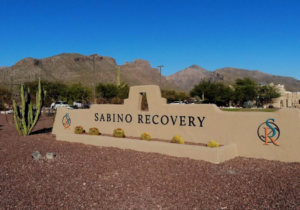
Sabino Recovery is a residential treatment center in Tucson, Arizona, that welcomes clients from across the country. Our program is one trauma-focused residential model designed to address a range of mental health and addiction challenges, including C-PTSD, PTSD, depression, anxiety, dual diagnosis, and substance use that is intertwined with trauma.
A Trauma-First Philosophy That Addresses Root Causes, Not Just Symptoms
At Sabino, we begin with the belief that symptoms usually make more sense when you understand the trauma beneath them. Depression, anxiety, and substance use are often expressions of an overwhelmed nervous system carrying old pain. Rather than organizing care around diagnoses alone, we focus on what is underneath: unresolved trauma, nervous system dysregulation, and the ways the body has adapted to survive.
This trauma-first philosophy shapes everything from how we assess you at intake to which therapies we recommend. You can read more about our approach to residential trauma treatment and to PTSD specifically.
The Sabino Environment: Why the Desert Setting Matters Clinically
Sabino sits on 140 acres in the Tucson desert. Quiet walking trails. Open sky. Space for the body to slow down. The setting is not decorative. It is part of how we support nervous system regulation, giving clients an environment that consistently signals safety while the deeper work unfolds.
For many people coming from densely scheduled lives, the first few days are simply about learning what quiet feels like again.
Individualized Care: What 10+ One-on-One Sessions Per Week Actually Looks Like
Individualization at Sabino is concrete. Each client receives 10 or more one-on-one sessions per week with therapists, medical providers, dietitians, and integrative specialists, totaling over 50 personalized touchpoints throughout a typical stay. Treatment plans are co-created, reviewed daily, and adjusted weekly based on what is actually working for you.
There are no tracks. There is no template. The care moves with you.
Evidence-Informed Modalities: EMDR, Somatic Experiencing, Neurofeedback, and More
Our multidisciplinary team integrates psychiatric care with evidence-informed modalities, including EMDR, which supports the brain in reprocessing traumatic memories so they no longer hijack the present; somatic experiencing, which helps release trauma held in the body; neurofeedback, which trains the brain toward more regulated patterns; equine therapy, which builds nonverbal awareness of self and other; and trauma-informed yoga, which gently restores the body’s sense of safety.
Clients are empowered to choose from a range of therapies, so the healing experience feels both personal and effective. If you are weighing whether residential care is the right level of support, this comparison of residential versus outpatient treatment can help clarify the difference.

Taking the First Step: What the Admissions Process Looks Like
Reaching out for the first time is often the hardest part. By the time someone picks up the phone, they have usually been thinking about it for a long time. A good admissions process honors that by being calm, clear, and genuinely informative rather than transactional.
Starting With a Conversation: Clinical Assessment and Fit
The first conversation is usually with an admissions clinician who listens to your story, asks about what you have tried, and helps you think through whether the program is a good fit for what you are carrying. This is not a sales call. It is a clinical conversation. If we are not the right fit, we will say so and help you think about what might be.
Insurance Verification and Financial Transparency
If you choose to move forward, our team verifies your insurance benefits, including any out-of-network coverage, and gives you a clear picture of what your financial responsibility is likely to be. We answer questions directly, and we put numbers in writing.
From First Call to Arrival: What the Transition Into Care Looks Like
From there, we help coordinate travel logistics, prepare you and your family for what to expect, and plan a calm arrival. By the time you land in Tucson, the team already knows who you are and what you are coming in to work on. Care begins right away, gently, and continues to deepen as trust builds.
Aftercare planning starts well before you leave. Because clients come from across the country, our team works with you to build a step-down plan that connects you with providers and support in your home community, along with ongoing alumni connection that extends the relationship long after your stay.
Frequently Asked Questions
Many people cycle through multiple programs because conventional treatment often focuses on symptoms rather than the unresolved trauma or nervous system patterns underneath them. When the root causes are not addressed, symptoms tend to return, even after periods of improvement. This is not a reflection of personal failure; it usually signals that a different kind of care, often trauma-focused and individualized, is what is actually needed.
Many private insurance plans include out-of-network benefits that can be applied toward residential mental health and trauma treatment at an out-of-state program. Coverage varies based on your specific plan, deductible, and the program’s billing structure, which is why most reputable treatment centers offer a complimentary insurance verification. An admissions team will typically contact your insurance company directly to confirm what is covered and provide a clear estimate of your financial responsibility before you commit.
The typical length of stay ranges from 30 to 90 days, though the right duration depends on individual clinical needs and progress rather than a fixed program length. Trauma-focused work, especially for complex presentations like C-PTSD or co-occurring disorders, often benefits from longer stays that allow time for stabilization, processing, and integration. Your treatment team will recommend a length of stay based on your assessment and adjust as your needs evolve.
Yes, traveling alone to an out-of-state treatment center is generally safe and very common, especially when the program’s admissions team coordinates logistics with you. Most centers help arrange flight planning, ground transportation from the airport, and a guided arrival process, so you are supported from the moment you leave home. If you would feel more comfortable being accompanied by a family member or trusted person, that can typically be arranged as well.
Yes, family involvement is often a meaningful part of residential treatment, even when the program is far from home. Many trauma-focused centers offer structured family programs, family therapy sessions, and remote participation options through secure video so loved ones can stay involved in the healing process. Distance does not have to mean disconnection, and thoughtful family involvement can actually deepen during treatment when supported by the right clinical structure.
Inpatient treatment typically refers to short-term, hospital-based care focused on acute stabilization, often in a locked psychiatric unit. Residential treatment is a longer-term, live-in level of care in a non-hospital setting, designed for deeper therapeutic work once someone is medically stable. For people doing trauma-focused healing, residential treatment usually offers a calmer environment and more time for individualized, in-depth care than an inpatient setting.
Traveling for trauma treatment may be the right choice if local programs lack the clinical specialization you need, if you have tried nearby options and continue to struggle, or if privacy and environmental distance from familiar triggers would meaningfully support your healing. It may not be the right fit if you have caregiving responsibilities that cannot be covered or if the cost would create more instability than it resolves. A clinical conversation with an admissions team can help you think through fit honestly before you decide.
Aftercare planning for out-of-state clients usually begins well before discharge and is built around your home community. The treatment team works with you to identify therapists, psychiatric providers, and support groups in your area, and to create a clear step-down plan that matches the level of support you need as you transition home. Many programs also offer ongoing alumni support, including virtual groups and check-ins, so the connection continues regardless of where you live.
When You’re Ready to Talk, We’re Here
If you have been carrying this for a long time, you do not have to figure out the next step alone. A short, unhurried conversation with our admissions team can help you understand your options and decide what feels right for you. You can reach out to Sabino Recovery here whenever you are ready.