
Residential trauma treatment for professionals is a confidential, immersive form of care that addresses the unresolved trauma often hiding beneath burnout, high-functioning anxiety, and substance use, while protecting the privacy, career, and identity of the person seeking help. It offers something outpatient care often cannot: distance from the demands that keep the nervous system locked in survival mode, and the time to actually heal.
If you are reading this, you may already know something is wrong. You may be the person others rely on, the one who holds it together at work while quietly unraveling at home. You may have tried therapy, medication, or sheer willpower, and still feel like you are running on a system that is barely holding.
This guide walks through what trauma actually looks like in a professional’s life, why residential care often works when other approaches have not, what confidentiality really protects, and how to plan a leave that supports your healing without dismantling your career.
- High-functioning professionals often carry unresolved trauma that hides beneath productivity, performance, and chronic overwork.
- Residential trauma treatment removes you from daily triggers so your nervous system can regulate and deeper healing can begin.
- Confidentiality protections, FMLA, and thoughtful employer communication can make stepping away possible without compromising your career.
- Trauma-focused therapies like EMDR, somatic experiencing, and neurofeedback are well-suited to analytical, high-achieving minds.
- Returning to work after residential treatment often means showing up differently, with more clarity, presence, and capacity to lead.
When High Achievement Becomes a Way of Hiding
There is a particular kind of professional who is praised in every performance review, requested by every client, and quietly falling apart in the car before walking through the front door at night. From the outside, they look composed, capable, and in control. Inside, the nervous system is humming at a frequency that never quite turns off.
This is not a story about ambition being a problem. Drive, focus, and care for one’s work are good things. The concern is what happens when work becomes the place you go to avoid yourself, and when high performance is the only language your body still speaks fluently.
The gap between how you appear and how you actually feel
Many high-functioning professionals describe a widening gap between their outer and inner life. Colleagues experience steady leadership. You experience a low hum of dread. Friends see someone who is doing well. You feel a flatness that is hard to name, or a tightness in the chest that does not leave on weekends.
That gap is worth paying attention to. It is often the first honest signal that something underneath is asking to be seen.
How trauma hides beneath productivity and performance
Trauma does not always look like a single catastrophic event. It can be the long accumulation of childhood emotional neglect, a high-stakes career field where vulnerability felt unsafe, a relationship that eroded your sense of self, or repeated exposure to suffering through work in medicine, law, finance, or first response. The body remembers all of it, even when the calendar does not.
For many professionals, productivity becomes the strategy that finally worked. If you achieved enough, you were safe. If you stayed busy enough, you did not have to feel. Over time, that strategy starts to look like a personality, and the trauma underneath becomes harder to see. If you are curious about how trauma can live in the body long after the events themselves, that is often where the conversation begins.
Why high-functioning coping patterns eventually stop working
The difficulty with high-functioning coping is that it works, until it does not. Sleep starts to fragment. A glass of wine in the evening becomes two, then three. Irritability sharpens. Small disappointments feel disproportionately heavy. The very thing that kept you running starts to wear down the system that was running it.
This is not failure. It is biology. A nervous system cannot stay in performance mode indefinitely without a cost.

What Trauma Actually Looks Like in a Professional’s Life
One reason professionals often miss their own symptoms is that trauma rarely arrives looking like the stereotype. There may be no obvious flashback, no dramatic collapse. Instead, the signs are subtler, woven into how you work, sleep, eat, and relate.
Burnout versus trauma: understanding the overlap
Burnout and trauma are not the same thing, but they overlap, and that overlap matters for treatment. Burnout is generally understood as a response to chronic workplace stress, including exhaustion, cynicism, and reduced effectiveness. Trauma is the lasting impact of overwhelming experiences on the nervous system, often including hypervigilance, emotional dysregulation, and disconnection.
Here is a simple way to think about the difference.
| Burnout | Trauma |
| Often improves with rest, boundaries, and workload changes | Often persists even with rest and time off |
| Tied closely to the demands of work | Tied to deeper patterns in the nervous system and history |
| Responds well to lifestyle adjustments | Often requires trauma-focused therapeutic work |
| Cynicism and exhaustion are central | Hypervigilance, numbing, and reactivity are central |
Many professionals carry both. When burnout does not lift with vacation, sabbaticals, or job changes, unresolved trauma is often part of the picture. The distinction between trauma responses and a formal PTSD diagnosis can also help explain why your experience does not fit a textbook profile but still deserves real care.
High-functioning anxiety and the nervous system under pressure
High-functioning anxiety often looks like preparation, attention to detail, and a strong work ethic. Underneath, it can feel like a body that never lets go. Shoulders that do not drop. A mind that runs threat assessments while you brush your teeth. Sleep that is technically happening but is not restorative.
This is nervous system dysregulation. Chronic activation of the body’s stress response is adaptive in short bursts and corrosive over years. The same hypervigilance that helps you anticipate every problem at work can keep you awake at three in the morning, scanning for threats that are not there.
When alcohol or substances become part of the routine
For many professionals, substance use does not start as a problem. It starts as a tool. A drink to come down after a long day. A pill to sleep. Something to take the edge off a Sunday night. Over time, the tool becomes a tether, and what once felt like a choice begins to feel like a requirement.
This is the territory of co-occurring disorders, where substance use and unresolved trauma reinforce each other. Treating one without the other rarely holds. Trauma-focused care that also addresses substance use disorder is often what finally creates traction.
Physical symptoms that signal something deeper is happening
The body keeps a record. Chronic migraines, gut issues, jaw tension, autoimmune flares, back pain that imaging cannot fully explain. These are not in your head. They are often the nervous system expressing what words have not been able to. For some, the experience aligns with what people describe as living with complex PTSD, even if no one has ever named it that way.
The Real Barriers Professionals Face When Seeking Help
The practical barriers to residential care are real. So are the emotional ones. Both deserve straight answers.
Confidentiality in residential treatment: what the law actually protects
Federal privacy laws, including HIPAA, protect your health information. A residential treatment center cannot disclose your presence or your records to your employer, your colleagues, or your family without your written consent, with narrow exceptions for situations involving imminent safety concerns or specific legal requirements.
In practice, this means your treatment is yours. You decide who knows, what they know, and when. For many professionals, understanding this clearly is the first moment they realize seeking help does not have to mean broadcasting it.
The myth that needing help means losing control
There is a quiet belief that runs underneath many high-achieving careers: if I admit I am struggling, I will lose everything I have built. That belief is understandable. It is also rarely accurate.
What tends to threaten careers is not seeking treatment. It is the slow erosion of judgment, presence, and health that comes from avoiding it. Getting help is not a loss of control. It is one of the most decisive uses of it.
Wondering if your situation is serious enough to warrant residential care? You are welcome to have a confidential conversation with our team to understand your options without commitment. Reach out to Sabino Recovery when you are ready.
Concerns about time away from work and responsibilities
Time is often the loudest objection. The team needs you. The deals need closing. The patients need seeing. The case needs handling. Stepping away feels impossible.
It is worth noticing that the same nervous system telling you that you cannot leave is the one that has not let you rest in years. The question is not whether stepping away is convenient. The question is whether continuing to operate at your current cost is sustainable. Trauma symptoms tend to persist and compound when they are not addressed, which is part of why waiting often costs more than going.
What happens to your professional standing when you prioritize your health
For licensed professionals, concerns about licensure are legitimate and vary by state and profession. Many licensing boards distinguish between voluntarily seeking care for a health condition and being reported for impairment that affects practice. In many cases, proactively engaging in treatment is viewed favorably and supports continued practice, while unaddressed impairment is what creates risk.
This is worth discussing directly with a knowledgeable attorney or your professional health program, not deciding in the dark.

Why Residential Treatment Works Differently Than Outpatient Care
Outpatient care can be transformative for many people. For high-functioning professionals carrying significant unresolved trauma, it often is not enough, and understanding why is part of making an informed decision.
The role of environment in nervous system regulation
A dysregulated nervous system cannot fully heal in the environment that is dysregulating it. If your days are structured around emails that need responding to, meetings that demand performance, and a phone that does not stop, the conditions for deep nervous system repair are simply not there.
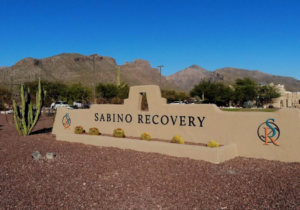
Residential treatment changes the conditions. At Sabino Recovery, our 140-acre desert setting in Tucson offers something more than scenery. The quiet, the space, and the rhythm of life away from constant demand allow the body to begin learning a different baseline.
Why distance from daily triggers creates space for real healing
When you live inside the environment that activates you, it is hard to feel what is underneath the activation. Step outside of it, and the layers begin to surface. Grief that was buried under deadlines. Anger that was redirected into productivity. Tenderness that had no room to exist.
This is not about escape. It is about creating enough space for honest contact with what has been there all along.
The difference between managing symptoms and addressing root causes
Symptom-focused care manages what is on the surface. Trauma-focused care reaches underneath. If you have been in therapy for years and feel like you are still managing the same patterns, you may be working at the level of symptoms while the roots remain untouched.
A trauma-first treatment philosophy holds that depression, anxiety, substance use, and chronic stress are often expressions of something deeper. Treating the expression without the source is part of why so many professionals describe getting better, plateauing, and then sliding back. Some readers find it helpful to consider the signs that residential-level care may be appropriate when outpatient work has plateaued.
What a trauma-informed residential program actually looks like day to day
At Sabino Recovery, our residential treatment program is one integrated, trauma-focused experience that supports a wide range of mental health and addiction challenges. Clients receive 10 or more one-on-one sessions per week with therapists, medical providers, dietitians, and integrative specialists, with daily plan reviews and weekly adjustments based on what is actually surfacing.
There are no tracks. There are no templates. Each treatment plan is co-created with you, not assigned to you. For a professional who has spent a career being responsible for everyone else, this kind of individualized attention is often the first place real change becomes possible.
Therapies That Speak to How Professionals Process and Heal
Professionals tend to be analytical, curious, and pattern-oriented. The good news is that many trauma-focused therapies work with that wiring, not against it.
EMDR and brain-based therapies for trauma processing
EMDR, or Eye Movement Desensitization and Reprocessing, helps the brain process experiences that have stayed unresolved in the nervous system. Rather than retelling the story in detail, EMDR uses bilateral stimulation to support the brain’s own integration process, drawing on neuroplasticity to allow old material to settle differently.
For analytical minds, EMDR often feels surprising. It does not require you to talk your way out of what happened. It allows your nervous system to update what it has been holding.
Somatic approaches: learning to work with the body, not against it
Many professionals are exquisitely trained to leave the body. Somatic experiencing offers a different relationship: slow, attuned, and rooted in physical sensation. The work helps you notice what is happening in your body, build tolerance for those sensations, and discharge survival energy that has been stuck.
This is often a turning point for clients who have done years of talk therapy. Insight matters, and the body has its own knowing that words alone cannot reach.
Neurofeedback and nervous system retraining
Neurofeedback uses real-time information about brain activity to help the nervous system learn new patterns of regulation. For clients who have lived in chronic hypervigilance, this can support the kind of baseline calm that has felt unreachable.
It is not a quick fix, and it is one part of a broader, integrative approach to healing.
Integrative and naturopathic care as part of a whole-person approach
Trauma affects sleep, hormones, digestion, inflammation, and immune function. Integrative medicine, including naturopathic care, nutrition support, and trauma-informed yoga, addresses what the body needs to actually repair. This is not in place of medical and psychiatric care. It works alongside it, so that healing can happen at every level. For professionals who have never had a conversation about their care that felt this whole, the experience itself can be unfamiliar. If you have not been here before, it can help to read about how to begin talking about trauma in a therapeutic setting so the first conversation feels a little less unknown.
Leave That Works
The logistics of leaving are often what separates the people who consider treatment from the people who actually go. Practical planning matters.
Understanding FMLA and medical leave protections
The Family and Medical Leave Act (FMLA) generally provides eligible employees with up to 12 weeks of job-protected, unpaid leave per year for serious health conditions, including mental health conditions and substance use disorders that require inpatient care. Eligibility depends on your employer’s size, your length of employment, and other factors.
FMLA does not require you to disclose your diagnosis. It requires medical certification of a qualifying condition. Many treatment centers, including Sabino Recovery, support clients in coordinating with their providers and HR to complete the necessary documentation.
How to communicate with your employer without oversharing
You are not obligated to explain your medical care. A simple, direct message often serves better than a detailed one. Something like, I will be on medical leave for a period of time, and my provider will work with HR on the necessary paperwork, is often enough.
Who you tell and what you share is your decision. Many professionals find that the people they were most afraid to tell respond with more grace than expected.
Preparing your team and managing handoffs before you leave
Practical handoff planning reduces both your anxiety and your team’s. Identify your highest-priority responsibilities. Document the essentials. Delegate clearly. Name a point person for what cannot wait.
The instinct to make yourself indispensable is often part of what got you here. Letting your team rise to meet the gap is, for many, an unexpected part of the healing itself.
Planning your return: what re-entry support looks like
The end of residential care is not the end of treatment. A thoughtful re-entry plan, including continued therapy, peer support, alumni connection, and clear agreements with yourself about how you will work, makes the gains sustainable. At Sabino, alumni support continues well beyond the residential stay, because lasting change is built over time, not over a single chapter.

What Healing Can Look Like on the Other Side
The goal is not to return as a smaller version of yourself. The goal is to return as someone whose system finally has room to live the life you have built.
Returning to work with a regulated nervous system
Clients often describe a different relationship with work after residential trauma treatment. The same demands are there, and the body is no longer responding to them with constant alarm. Decisions feel clearer. Difficult conversations feel less destabilizing. Energy at the end of the day is not entirely depleted.
This is not a personality change. It is what becomes possible when the nervous system is no longer in survival mode.
How relationships and leadership often shift after trauma treatment
When the inside changes, the outside follows. Many professionals report softer, more honest relationships at home. They listen differently. They lead differently. They notice their team as people, not just as outputs.
Leadership rooted in regulation is different from leadership rooted in vigilance. It does not lose its edge. It gains a kind of steadiness that others can feel.
The difference between surviving your career and actually thriving in it
There is a version of professional life that is survival dressed in success. There is another version where the work is meaningful, the body is well, and the person doing the work is genuinely present for it. The path between them is not a willpower problem. It is a healing one, and it is one you do not have to walk alone.
Frequently Asked Questions
No, not unless you choose to tell them. Federal privacy protections, including HIPAA, prevent treatment centers from disclosing your presence or records to your employer without your written consent, with narrow exceptions for safety or specific legal requirements. If you take FMLA leave, your employer is entitled to medical certification of a qualifying condition, but not to your diagnosis or treatment details.
Residential trauma treatment is designed to give your nervous system genuine distance from daily demands, which is part of why it works. Most programs, including Sabino Recovery, encourage stepping away from work obligations during your stay so that real healing can take place. Thoughtful handoff planning before you leave, including delegation and a clear point person, helps your team carry what is essential while you are focused on care.
Length of stay varies based on individual needs, the complexity of underlying trauma, and any co-occurring conditions. Many residential trauma programs offer stays ranging from several weeks to a few months, with FMLA generally protecting up to 12 weeks of job-protected leave for eligible employees. The right duration is something you and your clinical team determine together, based on what genuine healing requires for you.
For many people, outpatient therapy and medication are effective and appropriate. Residential treatment tends to make sense when symptoms persist despite ongoing outpatient care, when daily life is too activating for deep trauma work to be possible, or when co-occurring substance use makes consistent progress difficult. If you have been working hard in outpatient care and feel like you keep hitting the same ceiling, that is often a sign worth taking seriously.
Burnout is typically a response to chronic workplace stress and often improves with rest, boundaries, and workload changes. Trauma is the lasting impact of overwhelming experiences on the nervous system and tends to persist even with time off, because it is rooted in deeper patterns. The distinction matters because burnout-focused interventions alone often do not resolve trauma, which is why many high-functioning professionals find that rest helps temporarily but the underlying patterns return.
In most cases, voluntarily seeking treatment does not result in loss of licensure, and many licensing boards view proactive engagement in care favorably. What tends to create risk is unaddressed impairment that affects practice, not the act of getting help. Because rules vary by state and profession, it is worth consulting a knowledgeable attorney or your profession’s health program to understand your specific situation before making decisions in the dark.
A Quiet Next Step, When You Are Ready
If any part of this has felt familiar, you do not need to have it all figured out before reaching out. A short, confidential conversation can help you understand what residential care might look like for your specific situation, with no pressure and no expectation. Connect with our team at Sabino Recovery whenever the timing feels right for you.