Dual diagnosis treatment is integrated residential care for adults living with co-occurring mental health conditions and substance use, delivered through a trauma-first lens that addresses the unresolved experiences often driving both. At Sabino Recovery in Tucson, Arizona, this care happens within our single residential treatment program, where mental health, addiction, and trauma are treated together rather than as separate problems.
If you have moved between therapists, detox programs, or symptom-focused treatment and still feel stuck, you are not alone. Many people arrive at our doors after trying to address depression, anxiety, PTSD, or substance use one at a time, only to find the pieces kept coming apart. We meet you with compassion, clinical expertise, and a plan that treats you as a whole person.
On this page, you will learn what dual diagnosis treatment means, what integrated care actually looks like day to day, how care is personalized to your history, and what makes Sabino’s trauma-first residential model different from standard co-occurring programs.
I am text block. Click edit button to change this text. Lorem ipsum dolor sit amet, consectetur adipiscing elit. Ut elit tellus, luctus nec ullamcorper mattis, pulvinar dapibus leo.

When mental health struggles and substance use are tangled together, it can feel like you are fighting on two fronts at once, and losing ground on both. Sabino Recovery offers integrated dual diagnosis treatment within one trauma-focused residential program, so you are not asked to choose which pain to address first.
When Mental Health and Substance Use Overlap
Depression, anxiety, PTSD, and substance use rarely live in separate rooms. A drink at night to fall asleep, a pill to quiet panic, or a substance that finally makes the noise stop can become the thing that also makes healing harder. Understanding how these patterns overlap is the beginning of a different kind of care, and it is why we look at the whole picture rather than one diagnosis in isolation.
Why a Trauma-First Approach Changes the Equation
Most of the people we support have carried something for a long time before substances or symptoms ever entered the story. Our trauma-first approach treats unresolved trauma and nervous system dysregulation as the root that connects mental health and addiction, which is why so many clients begin to feel meaningful relief once these layers are addressed together.
Who This Program May Be Right For
Our residential program supports adults who have been through outpatient care, prior treatment, or years of trying to manage on their own without lasting relief. If you feel exhausted by cycles that keep repeating, integrated care may offer a different starting point. To speak with our admissions team, contact Sabino Recovery whenever you are ready.
What Dual Diagnosis Means and Why Integration Matters
Dual diagnosis, sometimes called co-occurring disorders, describes the experience of living with a mental health condition and a substance use disorder at the same time. At Sabino, we view these not as two separate problems, but as intertwined patterns that often share a common root.
The Link Between Trauma and Substance Use
Substance use often begins as a way to survive something. It can quiet flashbacks, soften grief, dull hypervigilance, or make it possible to sleep. Over time, the very coping strategy that once helped becomes another source of pain. You can learn more about how addiction and mental illness co-occur and why these patterns so often show up together.
Why Treating One Condition at a Time Often Falls Short
Many traditional programs address addiction first and mental health second, or focus on symptoms without exploring what is underneath. When the trauma driving both conditions is left untouched, the relief tends to be temporary. Integrated care addresses mental health, substance use, and trauma inside a single, coordinated plan, which is often what allows healing to hold.
Common Co-Occurring Conditions We Support
Within our residential program, we support adults navigating a range of overlapping conditions, including:
- PTSD and complex trauma alongside alcohol or substance use
- Depression paired with substance use as a coping response
- Anxiety, panic, and distinctions between PTSD and anxiety that shape how substances are used
- Bipolar patterns co-occurring with substance use
- Personality-related struggles with relationship, identity, and addiction cycles
What to Expect from Residential Dual Diagnosis Treatment at Sabino
Our residential program is one integrated experience, not a set of packages you choose between. Length of stay ranges from a 35-day minimum up to 90 days, based on your clinical needs and the depth of trauma work involved, and is co-created with your care team rather than assigned as a fixed track.
Residential Treatment in a Calm Desert Setting
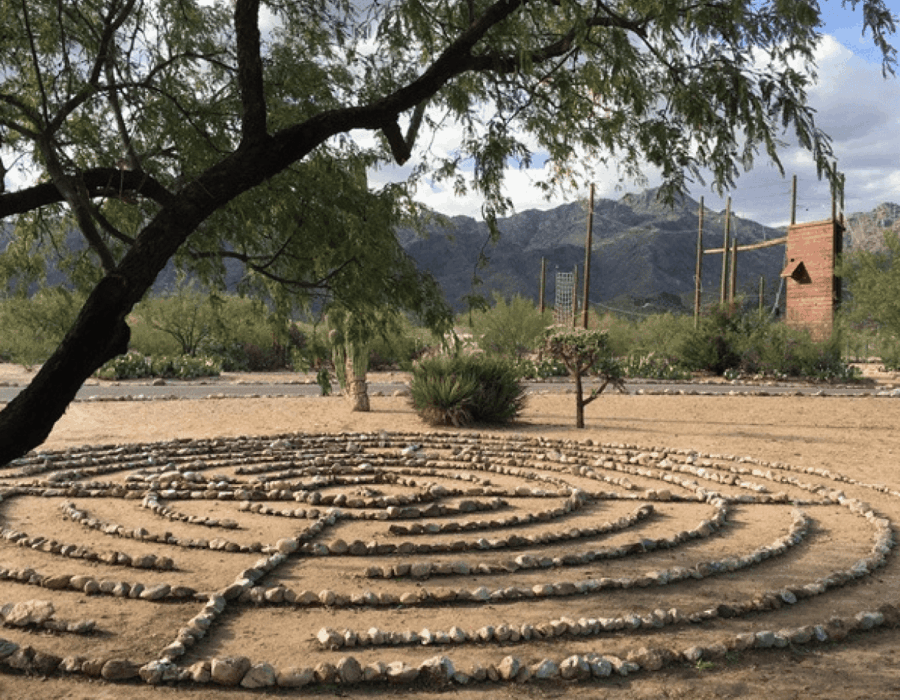
Set on 140 acres in the Tucson desert, our campus offers quiet outdoor spaces, walking trails, and the stillness many people have not felt in years. The setting itself is part of the therapy, giving your nervous system room to settle so deeper work becomes possible.
Individualized Care Plans, Co-Created and Adjusted Over Time
There are no preset tracks here. Your plan is built with your treatment team, reviewed daily, and adjusted weekly as your needs become clearer. You have real input in what your care looks like.
One-on-One Sessions and Small-Group Support
You receive 10 or more one-on-one sessions per week with therapists, medical providers, dietitians, and integrative specialists, totaling more than 50 personalized touchpoints across a 35-day stay. Group therapy is intentionally kept small, never exceeding eight participants, so conversation stays intimate and clinically meaningful.
Family Involvement as Part of the Healing Process
Healing is relational as well as personal. Our family program takes place on campus and includes in-person sessions with a dedicated family therapist, helping the people closest to you understand what you have been through and how to support what comes next.
How Dual Diagnosis Care Is Personalized at Sabino
No two people arrive with the same combination of trauma history, mental health needs, and substance use patterns. Your care is shaped around your specific story, not fit to a generic dual diagnosis template.
Psychiatric and Medical Support Integrated Into Your Plan
Our medical team combines naturopathic and allopathic medicine with evidence-based therapies, so psychiatric support, medication management, sleep, nutrition, and physical health all work together. This whole-person foundation gives trauma work a stable base.
Trauma-Informed Modalities Chosen for Your Needs
Therapies are selected collaboratively based on what supports your healing. You may work with EMDR, Internal Family Systems, Accelerated Resolution Therapy, or NARM, alongside cognitive and behavioral approaches such as CBT and DBT. If you want to understand how trauma-informed therapy differs from traditional approaches, that difference lives in every session.
Somatic, Mind-Body, and Experiential Approaches
Because trauma lives in the body as well as the mind, care often includes somatic experiencing, neurofeedback, trauma-informed yoga, equine-assisted therapy, breathwork, and acupuncture. These practices help regulate a nervous system that has been on alert for a long time.
Adjusting Care as You Progress Through Treatment
As you move through treatment, your plan moves with you. What was central in week one may soften in week four as new needs surface. That responsiveness is what allows genuinely individualized care.
What Integrated Dual Diagnosis Treatment May Support
Healing looks different for each person, and outcomes are never guaranteed. Still, many clients begin to notice meaningful shifts during and after residential care.
Emotional and Nervous System Benefits
- Steadier mood and reduced reactivity
- More restful sleep and improved energy
- A calmer, more regulated nervous system
- Reduced reliance on substances as a coping strategy
- A clearer sense of what has been driving distress
Relational and Behavioral Shifts That May Emerge
- Healthier communication with family and loved ones
- Renewed capacity for connection and trust
- Practical tools for managing triggers and cravings
- A more grounded sense of identity beyond diagnosis
- Momentum that carries forward into daily life
Is Residential Dual Diagnosis Treatment Right for You?
Deciding on a level of care is personal, and it helps to know what usually signals a need for more immersive support.
Signs That a More Immersive Level of Care May Help
You may be a good fit for residential care if symptoms are affecting your work, relationships, or ability to function day to day, if you have tried outpatient therapy or medication without lasting relief, or if substance use has become the primary way you cope with emotional pain. A period of focused, protected time away from daily pressures can create the conditions healing needs.
Wondering if residential care is the right step for you?
Our admissions team can talk through your situation and help you understand your options. Reach out to Sabino Recovery when you are ready for a real conversation.
When Previous Treatment Has Not Addressed the Root
If you have completed detox, outpatient programs, or standard treatment and still feel like the same patterns keep returning, it may be that the trauma underneath was never fully addressed. Understanding how PTSD affects the brain can help explain why symptom-focused care sometimes falls short and why integrated, trauma-first work often opens a different door.
How Sabino’s Approach Differs from Standard Dual Diagnosis Programs
Many dual diagnosis programs treat addiction first and mental health second, or apply the same set of interventions to every client. Our model looks different in a few specific ways.
Addiction-First vs. Trauma-First: A Different Starting Point
An addiction-first model tends to view mental health as a complication of substance use. A trauma-first model views substance use as a coping response to something older. Starting with trauma changes what you focus on, how you sequence therapy, and what lasting recovery looks like.
Why Symptom Management Alone May Not Be Enough
Managing symptoms matters, and stabilization is real progress. But when the roots go unexamined, symptoms often return in new forms. Our program pairs meaningful stabilization with the deeper work that helps prevent that recurrence.
The Limits of Track-Based or Siloed Treatment Models
Track-based programs assign clients to preset pathways: an addiction track, a trauma track, a mental health track. Sabino runs one integrated residential program with no tracks or templates. Your care is built for your story, not sorted into a category.
Nationally Recognized & Accredited


Contact our Admissions Team Today

I am so happy that I chose Sabino to begin my recovery. I have suffered for years from depression, anxiety, panic disorder, and PTSD. The programs that are offered here at Sabino have been truly phenomenal in helping me recover. I also appreciated the professional staff that are here on duty 24/7, which helps create a safe environment. Sabino Recovery uses effective “one on one” methods that meet each person’s individual needs because they evaluate and have a better understanding of your personal traumatic experiences. Thanks Sabino, I am truly grateful to you and the sabino family.
Regina


Why Sabino Recovery for Integrated Dual Diagnosis Treatment
What sets us apart is not a longer list of therapies. It is how care is delivered, and who it is designed for.
A Trauma-First Philosophy That Addresses Root Causes
Everything in our program is oriented toward healing the trauma that so often underlies mental health and substance use. That orientation shapes clinicians, modalities, groups, and even the pace of a typical day.
Truly Individualized Care, Not a Program Template
With 10 or more one-on-one sessions per week, more than 50 personalized touchpoints across a 35-day stay, daily plan reviews, and weekly adjustments, individualization is not a marketing word here. It is how the program operates.
An Integrative Team That Treats the Whole Person
Therapists, psychiatric providers, medical doctors, dietitians, and integrative specialists work as one team, weaving naturopathic and allopathic medicine with evidence-informed therapies. Your care is coordinated rather than fragmented.
A Setting Designed to Support Deep Healing
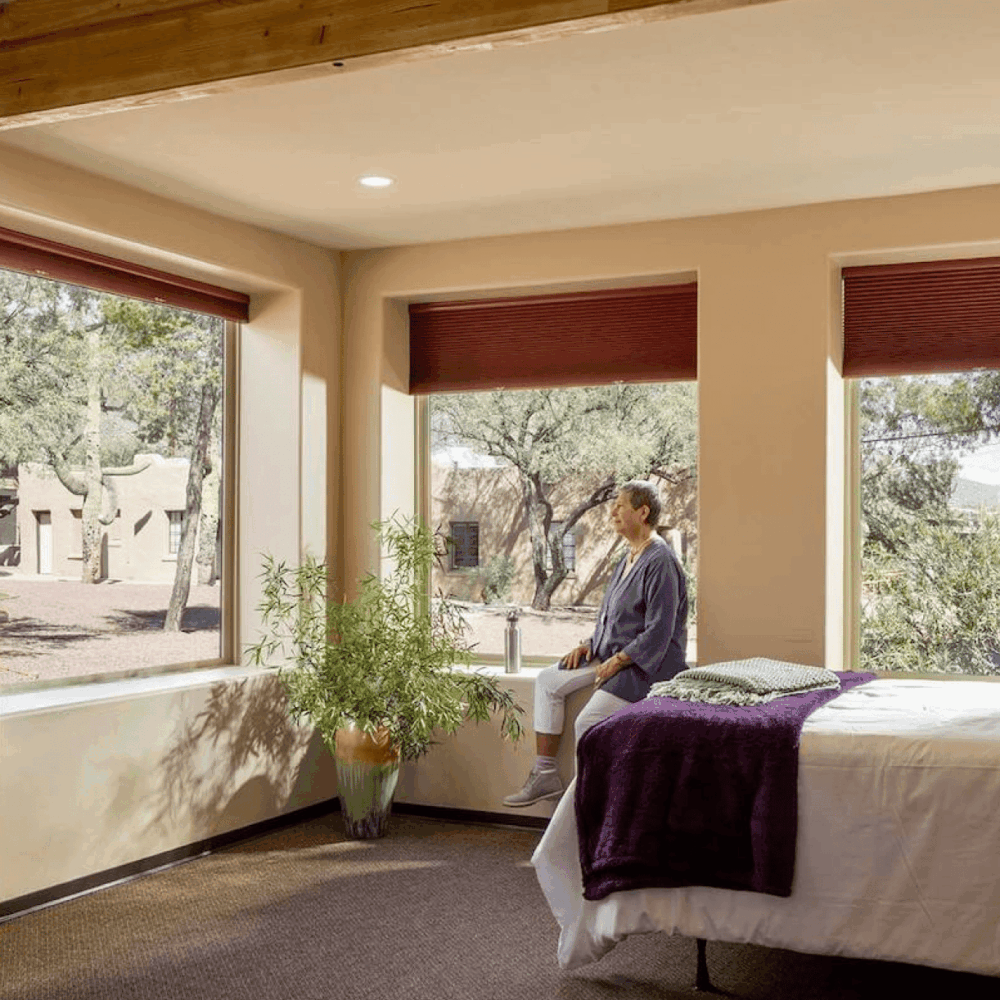
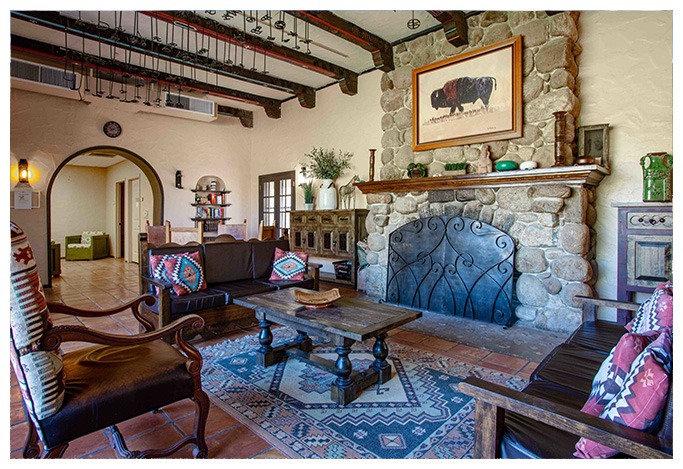
Our 30-bed, 140-acre desert campus offers privacy, quiet, and room to breathe. Rooms are modern and comfortable, and the campus includes spaces for movement, art, meditation, and connection with animals and the outdoors.
Elements of the Residential Dual Diagnosis Experience
Within your co-created plan, several core therapies often play a central role in dual diagnosis work.
EMDR and Trauma-Focused Therapy
Eye Movement Desensitization and Reprocessing helps the brain reprocess traumatic memories so they lose their charge. For clients whose substance use is tied to unprocessed trauma, EMDR can be a foundational part of care.
Somatic Experiencing and Nervous System Support
Somatic experiencing helps the body complete stress responses that got stuck, releasing patterns that talk therapy alone often cannot reach. This work is especially useful when trauma shows up as chronic tension, panic, or numbness.
Neurofeedback and Brain-Based Approaches
Neurofeedback is a form of training that helps the brain function more efficiently, which can support attention, emotional regulation, sleep, and reduced reactivity. It is one of several brain-based approaches we may include when clinically appropriate.
Equine Therapy, Yoga, and Experiential Modalities
Working with horses, trauma-informed yoga, breathwork, and expressive art give clients ways to experience safety, connection, and self-expression that words alone sometimes cannot deliver.
Support Beyond Your Residential Stay
Healing does not end at discharge. From early in your stay, we begin building the bridge to what comes next.
Transition Planning and Continuing Care
We work with you and your family to design a continuing care plan that may include outpatient therapy, psychiatric follow-up, community supports, and referrals to trusted providers. The goal is a steady step down, not a hard landing.
Alumni Connection and Ongoing Support
Once you are part of the Sabino community, you stay part of it. Our free, lifelong alumni program offers regular check-ins, peer connection, workshops, and a private community platform, so the relationships and progress built during residential treatment have somewhere to continue.
Take the Next Step Toward Integrated Healing
Reaching out is often the hardest part, and it can also be the moment things begin to change.
You Do Not Have to Figure This Out Alone
If you have been carrying mental health struggles and substance use together, sometimes for years, there is a way to address both at their root. Our team is here to answer your questions, help you understand your options, and talk through what integrated residential care could look like for your situation.
Contact Sabino Recovery to Learn More
Learn more about our residential treatment program or reach out directly to talk with an admissions counselor. When you are ready, we are here.
Therapies That May Be Part of Your Dual Diagnosis Treatment Plan
These therapies are integrated elements of your personalized residential plan, not separate programs you enroll in.
Clinical and Evidence-Informed Therapies
- Cognitive Behavioral Therapy (CBT)
- Mindfulness-Based CBT
- Dialectical Behavior Therapy (DBT)
- EMDR
- Somatic Experiencing
- Internal Family Systems (IFS)
- Accelerated Resolution Therapy (ART)
- NeuroAffective Relational Model (NARM)
- Psychodrama
- Existential Therapy
- Gestalt Psychotherapy
- Narrative Therapy
- Expressive Art
- Neurotherapy
- Meditation
- Equine-Assisted Therapy
Integrative and Mind-Body Supports
- Individual and group yoga, including trauma-informed yoga
- Acupuncture and cupping
- Massage, myofascial release, craniosacral therapy, and Tui Na massage
- Assisted stretching and personal training
- Breathwork, Qigong, and Tai Chi
- Reiki, chakra balancing, and BioEnergetic Medicine
- Hot and cold exposure therapies
- Therapeutic horsemanship and horseback riding
- Outdoor and adventure therapies
- Hypnosis and therapeutic art
- A state-of-the-art sleep study
Each of these is woven into a coherent plan, chosen with your clinical team based on what supports your healing.
Begin Your Healing at Sabino Recovery
If integrated, trauma-first dual diagnosis treatment sounds like the kind of care you have been looking for, we would welcome the chance to talk with you. Reach out to Sabino Recovery and our admissions team will listen, answer your questions, and help you understand what a next step could look like.