

Yes, cheating can cause PTSD-like symptoms for some people, and the experience is now widely recognized as a form of betrayal trauma. While post-traumatic stress disorder is most often associated with life-threatening events, the discovery of a partner’s infidelity can trigger many of the same nervous system responses: intrusive memories, hypervigilance, sleep disruption, and a sense that something inside you has fundamentally shifted.
If you have found yourself replaying details you wish you could forget, scanning your partner’s behavior for new signs of deception, or feeling like a stranger in your own body, what you are experiencing may make sense in the context of what you have been through. You are not overreacting. You are responding to a profound rupture in safety and trust.
This guide explains what betrayal trauma looks like, how it overlaps with and differs from PTSD, why some people develop lasting symptoms after infidelity, and what genuine healing can involve. It is written for anyone trying to understand their own experience, or the experience of someone they love.
- Cheating can produce PTSD-like symptoms including intrusive thoughts, hypervigilance, emotional numbing, and physical signs of nervous system dysregulation.
- Post-infidelity stress disorder (PISD), a term introduced by psychologist Dennis C. Ortman in 2005, describes the trauma response many people experience after discovering a partner’s infidelity.
- Research suggests anywhere between 30% and 60% of people who have been cheated on experience symptoms of anxiety, depression, or PTSD afterward.
- Chronic or long-term infidelity often compounds trauma severity and can deeply erode self-esteem and identity.
- Trauma-informed therapies such as EMDR, somatic approaches, and individualized residential care can help address betrayal trauma at the root rather than only treating symptoms.
When Infidelity Becomes Trauma
The moment of discovery often arrives with a strange clarity. A text appears on a screen. A friend says something they cannot take back. A pattern you had been ignoring suddenly clicks into place. In the hours and days that follow, many people describe feeling outside their own bodies, unable to eat, unable to sleep, unable to think about anything else.
This is not weakness, and it is not melodrama. Betrayal by an intimate partner activates some of the same threat-response systems in the brain and body that any other traumatic event would. When the person who is supposed to represent safety becomes the source of harm, the nervous system can struggle to know where to land.
Why Betrayal Can Feel Like a Threat to Survival
Human beings are wired for attachment. From an early age, we rely on close relationships to feel safe, regulated, and seen. When a primary attachment is suddenly disrupted by deception, the brain can register that rupture as a threat, even though no physical danger is present.
The result is often a cascade of physical and emotional responses you did not choose: a racing heart when your partner picks up the phone, a wave of nausea at a familiar song, an inability to fall asleep even when you are exhausted. These are signs that your nervous system is doing what it was designed to do, scanning for danger and trying to protect you.
The Difference Between Grief and Trauma After Infidelity
Grief and trauma can overlap, but they are not the same. Grief is the painful, often gradual process of mourning what has been lost: a version of the relationship, a sense of shared future, a particular kind of trust. Grief tends to soften over time, even when the underlying loss does not disappear.
Trauma is different. Trauma is what happens when an experience overwhelms your capacity to process it, leaving fragments of memory, sensation, and emotion lodged in the body and the nervous system. You may move through the day functionally, then be ambushed by a flashback in the grocery store. You may feel numb for weeks, then unravel without warning. Both grief and trauma can be present after infidelity, and both deserve care.
Who Is Most Vulnerable to Developing PTSD After Cheating
Not everyone who experiences infidelity develops lasting trauma symptoms, and there is no single profile that predicts who will. Several factors can shape how the experience lands, including your mental health history, the nature and length of the relationship, the circumstances surrounding the betrayal, and the support available to you in the aftermath.
People with prior trauma, particularly relational or attachment-based trauma, may be more susceptible to a deeper response. Discovering that the betrayal was long-standing, or that it involved someone close to you, can also intensify symptoms. None of this means you are broken. It means your story matters, and context matters.
Recognizing the Symptoms of PTSD and Betrayal Trauma
Many people who reach out for support after infidelity say some version of the same thing: I do not recognize myself. The symptoms can feel disproportionate, confusing, and embarrassing, especially for people who have always thought of themselves as resilient. That confusion is part of the wound, not evidence against it.
Intrusive Thoughts, Flashbacks, and Nightmares
Intrusive thoughts are unwanted images, memories, or imagined scenes that arrive without warning. After infidelity, these may include vivid mental pictures of the affair, replays of the moment of discovery, or imagined details you cannot stop constructing. They can be triggered by a song, a location, a scent, or nothing at all.
Nightmares are also common. You may dream of being abandoned, lied to, or chased. You may wake up several times a night, heart pounding, unable to return to sleep. Over time, sleep disruption alone can amplify nearly every other symptom you are experiencing.
Hypervigilance and the Constant State of Alert
Hypervigilance is the sense that you can never quite stand down. You may find yourself checking your partner’s phone, monitoring their schedule, noticing small inconsistencies in their tone of voice. You may feel jumpy, irritable, or unable to relax even in moments that should feel safe.
This is your nervous system trying to prevent another wound. It is exhausting, and it is not something you can simply talk yourself out of. Hypervigilance is one of the clearest signs that the body is still holding the trauma, regardless of what the mind has decided to forgive or move past.
Emotional Numbing, Withdrawal, and Disconnection
Not all trauma responses look activated. Some people respond to betrayal by going quiet. You may feel emotionally flat, disconnected from the people you love, or unable to access the joy you used to feel in ordinary moments. You may withdraw from friends, lose interest in activities, or feel as though you are watching your own life from a distance.
Numbing is the nervous system’s way of protecting you when feeling everything at full volume becomes unbearable. It is not avoidance in the usual sense. It is a survival adaptation, and it tends to ease as the body begins to feel safe again.
Physical Symptoms That Signal Nervous System Dysregulation
Betrayal trauma often shows up in the body before the mind fully catches up. Common physical signs include headaches, stomachaches, muscle tension, appetite changes, fatigue, and a racing heart. Some people describe a persistent feeling of pressure in the chest, or a sense that they cannot take a full breath.
These symptoms reflect a nervous system that is stuck in a state of activation or shutdown. They are not imagined, and they are not separate from the emotional experience. Healing the mind and healing the body, in this context, are the same project.

Understanding Post-Infidelity Stress Disorder (PISD)
Sometimes simply having a name for what you are experiencing brings a measure of relief. The term post-infidelity stress disorder, or PISD, was introduced in 2005 by psychologist Dennis C. Ortman, PhD, to describe the cluster of trauma-related symptoms many people develop after discovering a partner’s infidelity.
What PISD Is and How It Differs from PTSD
PISD is not currently a formal diagnosis in the DSM, but it has become a useful clinical framework for understanding what so many people go through. It overlaps significantly with PTSD: intrusive thoughts, hypervigilance, emotional dysregulation, sleep disturbance, and difficulty concentrating are all common features.
The distinction is in the source. PTSD is most often associated with events that involve a perceived threat to life or physical safety. PISD focuses on the trauma of a profound relational and attachment rupture. The symptoms can be just as severe, and research suggests anywhere between 30% and 60% of people who have been cheated on experience symptoms of anxiety, depression, or PTSD after discovering their partner’s infidelity. Whether your experience meets the criteria for one label or another is far less important than whether you receive care that takes your suffering seriously.
How Chronic or Long-Term Infidelity Compounds the Trauma
There is a meaningful difference between a single discovered incident and a years-long pattern of deception. When infidelity has been ongoing, the discovery often forces a painful reinterpretation of the entire relationship. Memories you treasured begin to feel suspect. Conversations you trusted are revealed to have been built on a hidden script.
This kind of long-standing deception is its own form of covert harm. It can undermine self-esteem in ways that differ from a one-time betrayal, because it suggests that the person you loved was capable of sustained, intentional concealment over a long stretch of your shared life. Healing from this kind of trauma often takes more time and more layered support.
The Role of Shame, Self-Blame, and Identity Disruption
Shame is one of the most common, and least talked about, parts of betrayal trauma. Many people quietly believe that the infidelity was somehow their fault: they were not attentive enough, not attractive enough, not enough in some unnamed way. Even when the rational mind knows better, the body and the inner critic can tell a different story.
Betrayal can also disrupt identity. You may find yourself questioning your judgment, your worth, and your sense of who you are outside of the relationship. Naming the shame, rather than hiding from it, is often the first real step toward releasing its grip.
How Infidelity Affects Mental Health Beyond the Relationship
The effects of betrayal rarely stay contained within the relationship itself. They can ripple outward into your work, your friendships, your sense of self, and your ability to imagine a future. These are not personal failures. They are predictable responses to a profound rupture in safety.
Depression, Hopelessness, and Loss of Self-Worth
Depression after infidelity can look like persistent sadness, low motivation, withdrawal from people you used to enjoy, and a quiet but corrosive sense of hopelessness. You may struggle to get out of bed, to eat regular meals, or to remember what you used to care about.
These symptoms often make more sense when you understand the trauma beneath them. Depression in this context is rarely a chemical imbalance arriving out of nowhere. It is frequently the mind and body’s response to a wound that has not yet been processed at the root.
Anxiety, Hypervigilance, and Fear of Future Relationships
Anxiety after infidelity often centers on trust. You may experience obsessive thoughts, fear of abandonment, or a constant low-grade dread that something terrible is about to happen again. Some people develop panic symptoms, including racing heart, sweating, and a sense of unreality, particularly when reminders surface.
This vigilance can extend to future relationships, even when the original partner is no longer in the picture. The body remembers what the mind has tried to put away.
How Betrayal Trauma Can Resurface in New Relationships
It is common for betrayal trauma to quietly shape the relationships that come after. You may find yourself checking a new partner’s phone, struggling to fully receive their affection, or pulling away the moment things begin to feel close. You may swing between wanting reassurance and feeling suffocated by it.
These patterns are not character flaws. They are protective strategies your nervous system developed for very good reason. Without support, however, they can become barriers to the very connection you are longing for. Understanding how trauma can shape patterns of trust and intimacy in later relationships is often a turning point in deciding to seek deeper care.
What Healing from Betrayal Trauma Actually Looks Like
Many people try to move on from infidelity through sheer effort. They throw themselves into work, into the gym, into new routines, into new relationships. Sometimes they reconcile and pour everything into rebuilding. These efforts can be meaningful, and they are rarely enough on their own when the trauma is still living in the body.
Are you wondering whether what you are carrying actually requires professional support?
If you have been working hard to move forward and still feel stuck, that does not mean you are failing. It often means the wound is deeper than willpower can reach. Our team is here whenever you would like to talk through what trauma-informed support for betrayal could look like for you.
Why Willpower Alone Is Not Enough to Heal Trauma
Trauma is stored in the nervous system, not just in conscious memory. You can decide intellectually to forgive, to move on, to stop thinking about it, and still find your body responding as though the threat is current. Pushing harder against trauma symptoms tends to entrench them rather than resolve them.
Real healing involves helping the body and brain learn, on a felt level, that the danger has passed. That is slow, relational work, and it usually requires support from people trained to guide it.
The Importance of Safety, Stability, and Nervous System Regulation
Before trauma can be processed, the system has to feel safe enough to begin. This is why so much trauma-informed work starts with stabilization: regular sleep, nutritious food, gentle movement, predictable routines, and relationships that feel reliably caring. These are not extras. They are the foundation.
For people whose lives have been thrown into chaos by infidelity, simply creating a stable environment can feel impossible from the inside. This is one of the reasons residential care can be so useful: it provides a calm, contained setting in which the nervous system can finally exhale.
Rebuilding Identity and Trust After Betrayal
Healing is not only about reducing symptoms. It is also about reclaiming a sense of who you are. Many people emerge from betrayal trauma with a clearer understanding of their values, their needs, and the kinds of relationships they want to build going forward.
This is not a quick or linear process. There are setbacks, and there are days that feel like backsliding. With the right support, though, many people find that they not only recover, but come to know themselves in ways they had not before.
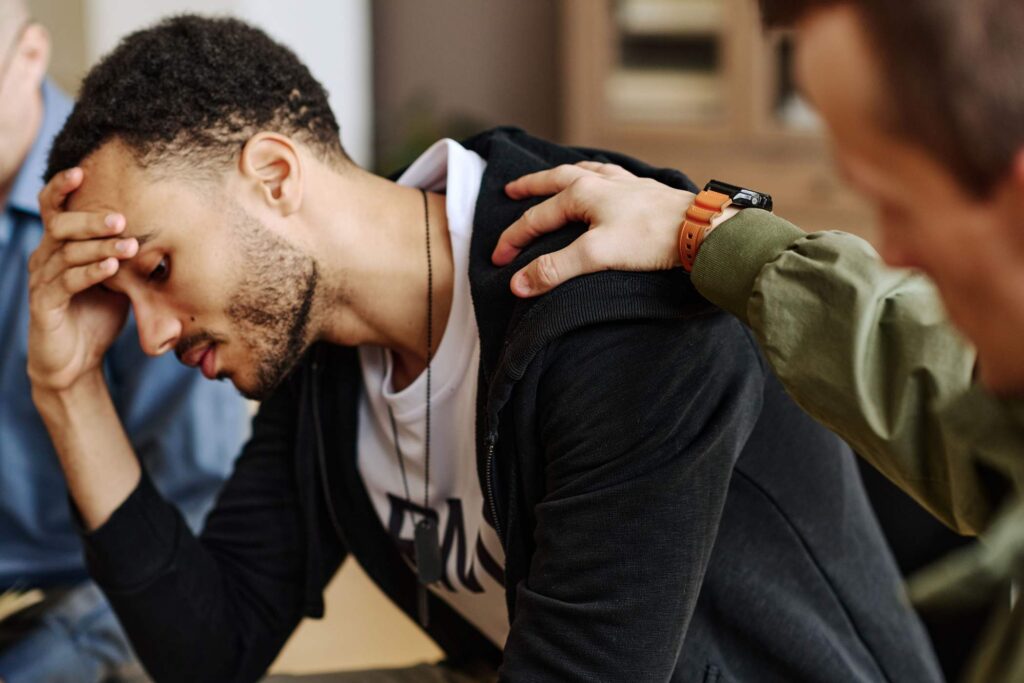
Trauma-Informed Therapies That Support Recovery
Not all therapy is equally effective for trauma. Approaches that focus only on changing thoughts or behaviors, without engaging the body and the nervous system, often fall short for people carrying betrayal wounds. The modalities that tend to help most are those designed to work with trauma directly.
EMDR: Processing Traumatic Memories at the Root
Eye Movement Desensitization and Reprocessing, or EMDR, is an evidence-based therapy that helps the brain process traumatic memories that have become stuck. Rather than asking you to talk through the worst moments in detail, EMDR uses bilateral stimulation, often through guided eye movements, to support the brain in integrating what happened.
For betrayal trauma, EMDR can help reduce the intensity of intrusive memories, soften the emotional charge of triggers, and shift the deep beliefs that often form after infidelity, such as I am not enough or I cannot trust myself. It works at the root rather than only at the surface.
Somatic Approaches and Nervous System Healing
Somatic experiencing and other body-based therapies focus on the physical sensations and patterns of activation that trauma leaves behind. Through gentle attention to what is happening in the body, these approaches help release stored survival energy and restore a sense of internal safety.
These modalities can be especially helpful for people whose betrayal trauma shows up primarily in the body: chronic tension, gut issues, sleep disturbance, a sense of never being able to fully relax. Pairing somatic work with practices like trauma-informed yoga and neurofeedback can deepen the effect over time.
The Role of Individualized, Trauma-First Residential Care
For people whose symptoms are interfering with daily life, or who have not found lasting relief in outpatient settings, residential care can offer something different. At Sabino Recovery, our residential treatment program is trauma-focused and deeply individualized, designed to support a range of mental health and addiction challenges, including betrayal trauma and PTSD.
Rather than assigning you to a track, we co-create your plan with you. Each client receives ten or more one-on-one sessions per week with therapists, medical providers, dietitians, and integrative specialists, totaling over fifty personalized touchpoints throughout the stay. Care is reviewed daily and adapted weekly based on what is actually helping. For people navigating co-occurring concerns such as depression, anxiety, or substance use alongside betrayal trauma, our dual diagnosis approach allows the layers to be addressed together rather than in isolation.
Set on 140 acres in the Tucson desert, the environment itself is part of the work. Quiet outdoor spaces, walking trails, equine therapy, and a calm setting give the nervous system room to settle, which is often the first prerequisite for any deeper healing to take hold. For some readers, exploring what recovery from post-infidelity stress disorder can look like over time is a useful next step, while others may benefit from practical guidance on beginning to process cheating trauma.
Taking the First Step Toward Healing
Reaching out for help is often the hardest part. There can be shame in admitting how much this has affected you, fear that no one will understand, and a quiet worry that nothing will actually work.
You Do Not Have to Carry This Alone
What you are feeling makes sense in the context of what you have been through. Betrayal trauma is real, and it is treatable. You do not have to white-knuckle your way through it, and you do not have to wait until things get worse before you are allowed to ask for support.
How Sabino Recovery Supports Healing from Betrayal Trauma
At Sabino Recovery, we support people through betrayal trauma within our trauma-focused residential treatment program. Care is co-created, integrative, and centered on the belief that healing begins at the root. Whether you are just beginning to make sense of what happened or you have been carrying this for years, there is a path forward, and it does not have to be one you walk alone.
Frequently Asked Questions
Yes, it is common to experience PTSD-like symptoms after discovering a partner’s infidelity. Research suggests anywhere between 30% and 60% of people who have been cheated on experience symptoms of anxiety, depression, or PTSD afterward. Symptoms such as intrusive thoughts, hypervigilance, sleep disruption, and emotional numbing are recognized responses to betrayal trauma and do not mean something is wrong with you.
The duration varies widely from person to person and depends on factors such as the length and nature of the deception, prior trauma history, and the support available during recovery. Some people notice gradual improvement within months, while others carry symptoms for years, especially without trauma-focused care. Working with a trauma-informed therapist or program can help shorten that timeline and address the root of what is keeping symptoms in place.
Some people make meaningful progress through self-care, supportive relationships, journaling, movement, and time, especially when symptoms are mild. When symptoms include persistent intrusive thoughts, hypervigilance, panic, depression, or physical signs of nervous system dysregulation, professional support is usually needed because trauma lives in the body and brain in ways that willpower alone cannot reach. Reaching out for help is not a sign of weakness, it is a recognition of how the nervous system actually heals.
Betrayal trauma describes the specific wound that occurs when someone we depend on for safety and connection violates that trust, while PTSD is a broader clinical condition most often associated with events involving threats to physical safety. The two overlap significantly in symptoms, including intrusive memories, hypervigilance, and emotional dysregulation. Some clinicians also use the term post-infidelity stress disorder, introduced by psychologist Dennis C. Ortman in 2005, to describe the trauma response that can follow infidelity specifically.
Yes, unresolved betrayal trauma often carries into future relationships in subtle and not so subtle ways. You may find yourself struggling to trust a new partner, checking for signs of deception, pulling away when intimacy deepens, or alternating between wanting closeness and needing distance. These patterns are protective responses from a nervous system that learned to expect harm, and trauma-focused therapy can help loosen their grip so new relationships can feel safer.
No, your healing does not require the participation of the person who hurt you. Many people recover fully from betrayal trauma whether the relationship ends or continues. If you are choosing to rebuild the relationship, couples or family work can be valuable, but your individual healing is its own process and belongs to you. The most important factor is whether you have safe, skilled support to help you process what happened.
When You Are Ready, We Are Here
If you are wondering whether what you are experiencing after infidelity might be trauma, that question alone is worth honoring. Our team is glad to listen, answer questions, and help you understand what trauma-informed support could look like for you. You can reach out to Sabino Recovery whenever you are ready, with no pressure to decide anything in a single conversation.