
Most people who struggle with substance use have been asked the wrong question their entire lives. “Why can’t you just stop?” assumes the problem is willpower. But for many, the more honest question is: “What were you trying to survive?”

Trauma and substance use are deeply connected, and that connection is not a coincidence or an excuse. It’s biology. This article explores how unresolved trauma changes the brain and nervous system, why substances become a coping mechanism, and what it looks like when treatment finally addresses the root.

The Underlying Question

Woman sitting thoughtfully at home reflecting on trauma, emotional stress, and recovery healing

Trauma and substance use are usually deeply connected. People who have experienced traumatic events are significantly more likely to develop substance use challenges later in life. The connection exists because trauma changes the brain and nervous system in ways that make substances feel like a solution, at least temporarily.

Most conversations about substance use focus on the behavior itself: how much, how often, how to stop. But there’s a more important question underneath all of that. What was the substance use trying to do in the first place?

For many people, substances are not a recreational choice that spiraled out of control. Instead, they are a coping mechanism that developed in response to pain, fear, or overwhelm that had no other outlet. When you look at it this way, the pattern starts to make more sense. And so does the path toward healing.

For people seeking support, Sabino offers compassionate, trauma-informed addiction treatment that looks beyond the substance itself to understand what is driving the struggle underneath.

What Trauma Actually Is

You might think trauma only applies to combat veterans, survivors of abuse, or people who have lived through catastrophic events. While those experiences certainly qualify, trauma is actually much broader than most people realize.

Trauma is not defined solely by the event itself. It’s defined by the impact that event has on your nervous system and your sense of safety, self, and connection. Two people can experience the same situation and walk away with very different responses. One may process it and move forward, while the other carries it in their body for years.

Clinicians often distinguish between two types:

  • Big T trauma: Acute, identifiable events such as accidents, assault, sudden loss, or witnessing violence
  • Small t trauma: Chronic experiences like emotional neglect, instability, humiliation, or growing up in an unpredictable environment

Both types can have profound effects on how the brain and body function over time. Many people who struggle with substance use have minimized their own history, telling themselves it “wasn’t that bad” or that others had it worse. Yet the nervous system doesn’t compare. It simply responds to what it experienced.

Sabino’s approach to trauma treatment recognizes that these experiences can take many forms and that healing often begins by understanding how trauma has shaped both emotional pain and coping behaviors.

How Trauma Lives in the Body

The Nervous System Under Threat

When something overwhelming happens, your brain activates a survival response. The amygdala, which is the brain’s threat detection center, sounds an alarm. Your system floods with stress hormones like cortisol and adrenaline. All of this is designed to help you fight, flee, or freeze in the face of danger.

The problem is that when trauma goes unresolved, the nervous system can get stuck. It may remain in a state of chronic activation, which looks like hypervigilance, anxiety, and reactivity. Or it may shift into chronic shutdown, which looks like numbness, disconnection, and depression. Either way, the brain learns that the world is not safe. And it stays on alert even when the original threat is long gone.

This isn’t a choice or a character flaw. It’s biology.

Why Substances Offer Temporary Relief

Here’s where the connection becomes clear. Substances work, at least temporarily, to quiet a dysregulated nervous system.

Alcohol slows the stress response and creates a sense of calm. Opioids flood the brain with warmth and a feeling of safety. Stimulants can temporarily override numbness and create a sense of aliveness or control. From the brain’s perspective, this is not irrational. It’s the nervous system finding a way to regulate itself when nothing else has worked.

This is sometimes called “self-medication,” though that term can feel dismissive. What’s actually happening is that the brain discovered something that provides relief from unbearable internal states. The substance becomes a survival strategy, not a moral failing.

Understanding this doesn’t excuse harmful behavior. But it does explain the mechanism. And that explanation matters, because it points toward what actually helps.

People may also be navigating overlapping conditions such as anxiety, PTSD treatment needs, or depression, all of which can intensify the urge to seek relief through substance use.

The Research Is Clear

The link between trauma and substance use is one of the most well-documented findings in behavioral health research.

The Adverse Childhood Experiences (ACE) Study, conducted by the CDC and Kaiser Permanente, found that individuals with four or more ACEs are seven times more likely to develop alcohol use disorder. They are also up to ten times more likely to use illicit drugs compared to those with no ACEs.

Among people seeking treatment for substance use disorders, rates of PTSD and trauma exposure are significantly higher than in the general population. Some studies place co-occurring PTSD at 30 to 50 percent of people in treatment for substance use.

At Sabino Recovery, 70 percent of clients arrive with trauma-related symptoms, including PTSD. This reflects a broader clinical reality: trauma and substance use are not separate issues that happen to overlap. They are deeply intertwined, and treating one without addressing the other often leaves the root cause untouched.

This is one reason Sabino integrates dual diagnosis treatment into care when mental health concerns and substance use are affecting one another.

Why Treating the Substance Alone Often Isn’t Enough

If you’ve been through treatment before without lasting results, you’re not alone. Many people cycle through programs that focus primarily on stopping the substance through detox, behavioral modification, or relapse prevention skills. But those programs don’t always address what was driving the use in the first place.

When the root cause remains untouched, the nervous system stays dysregulated. The coping mechanism may be removed, but the pain it was managing is not. This is why so many people relapse after conventional treatment. The underlying wound is still there, still seeking relief.

This isn’t a criticism of all treatment approaches. The field is evolving, and more programs are beginning to understand the importance of trauma-integrated care. But if past treatment didn’t work for you, it may not be because you failed. It may be because the root wasn’t reached.

If you or someone you love has been through treatment before without lasting results, it may be time to explore what a trauma-first approach looks like through Sabino’s residential treatment program and broader program offerings.

What Healing Looks Like When Trauma Is the Starting Point

Addressing the Root, Not Just the Behavior

When treatment begins with trauma, the goal shifts. It’s no longer just about stopping a behavior. It’s about understanding and healing what drove it.

Trauma-informed care involves helping the nervous system find safety again. It means processing unresolved experiences in ways the brain can integrate, rather than continuing to suppress or avoid them. It also means rebuilding a sense of self that isn’t organized around survival.

This kind of healing is not linear. It’s not rushed. And it unfolds best in a setting where safety, consistency, and genuine human connection are present.

Evidence-Informed Approaches That Support Recovery

Effective treatment for trauma and substance use works at multiple levels: cognitive, somatic, and neurological. Several evidence-informed modalities support this kind of integrated healing:

  • EMDR therapy: A therapy that helps the brain process traumatic memories that are “stuck,” which can reduce their emotional intensity over time
  • Somatic experiencing: A body-based approach that works with stored trauma responses, helping the nervous system complete stress cycles it couldn’t finish at the time of the original event
  • Neurofeedback: A form of brain training that supports self-regulation, which can help reduce hypervigilance and emotional reactivity
  • Trauma-informed yoga and mindfulness therapy: Practices that help rebuild the connection between mind and body, which trauma often disrupts

These approaches are not supplemental add-ons. They are central to healing when trauma is at the root of substance use.

Sabino also uses therapies such as Cognitive Behavioral Therapy, Dialectical Behavior Therapy, Individual Therapy, Group Therapy & Support Sessions, and other trauma-focused services available through its broader therapy program.

The Role of Environment and Relationship

Healing from trauma does not happen in isolation. It happens in relationships and in environments that feel safe.

The nervous system heals in the presence of safety, consistency, and attunement. A residential setting that offers privacy, calm, and genuine human connection creates the conditions for deep trauma work. An unhurried environment allows the nervous system to begin regulating in ways that outpatient or high-stimulation settings may not support.

Healing often involves repairing or rebuilding trust in relationships as well. Family Therapy can be an important part of sustainable change, helping to transform not just the individual but the relational patterns surrounding them.

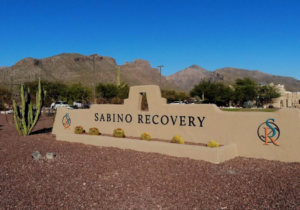
At Sabino Recovery, our residential treatment program is set on 140 acres in the Tucson desert. Clients receive 10 or more one-on-one sessions per week with therapists, medical providers, and integrative specialists. Treatment plans are co-created and adjusted weekly based on each person’s evolving needs. Experiential options such as Equine Therapy Programs can also support regulation, connection, and healing in a deeply relational way.

You Deserve More Than Symptom Management

Understanding the trauma-substance connection can be both clarifying and overwhelming. It may be a relief to finally have an explanation for patterns you couldn’t change. It may also bring up grief or frustration about time spent in approaches that didn’t address the root.

This understanding is a beginning, not a verdict. Healing is possible, not just from substance use, but from what drove it. It takes the right kind of support, the right environment, and an approach that treats you as a whole person rather than a diagnosis.

You don’t have to keep managing symptoms when there is a path to addressing what’s underneath them.

At Sabino Recovery, we begin where it matters most: at the root. If you’re ready to explore what trauma-focused care looks like, you can learn more about admissions, complete an insurance verification, explore common questions on our FAQ page, or read more on our blog.

 

Accessibility Toolbar

Why Substance Use Often Starts with Trauma

Written by: Sabino Recovery

Most people who struggle with substance use have been asked the wrong question their entire lives. “Why can’t you just stop?” assumes the problem is willpower. But for many, the more honest question is: “What were you trying to survive?”

Trauma and substance use are deeply connected, and that connection is not a coincidence or an excuse. It’s biology. This article explores how unresolved trauma changes the brain and nervous system, why substances become a coping mechanism, and what it looks like when treatment finally addresses the root.

The Underlying Question

Woman sitting thoughtfully at home reflecting on trauma, emotional stress, and recovery healing

Trauma and substance use are usually deeply connected. People who have experienced traumatic events are significantly more likely to develop substance use challenges later in life. The connection exists because trauma changes the brain and nervous system in ways that make substances feel like a solution, at least temporarily.

Most conversations about substance use focus on the behavior itself: how much, how often, how to stop. But there’s a more important question underneath all of that. What was the substance use trying to do in the first place?

For many people, substances are not a recreational choice that spiraled out of control. Instead, they are a coping mechanism that developed in response to pain, fear, or overwhelm that had no other outlet. When you look at it this way, the pattern starts to make more sense. And so does the path toward healing.

For people seeking support, Sabino offers compassionate, trauma-informed addiction treatment that looks beyond the substance itself to understand what is driving the struggle underneath.

What Trauma Actually Is

You might think trauma only applies to combat veterans, survivors of abuse, or people who have lived through catastrophic events. While those experiences certainly qualify, trauma is actually much broader than most people realize.

Trauma is not defined solely by the event itself. It’s defined by the impact that event has on your nervous system and your sense of safety, self, and connection. Two people can experience the same situation and walk away with very different responses. One may process it and move forward, while the other carries it in their body for years.

Clinicians often distinguish between two types:

  • Big T trauma: Acute, identifiable events such as accidents, assault, sudden loss, or witnessing violence
  • Small t trauma: Chronic experiences like emotional neglect, instability, humiliation, or growing up in an unpredictable environment

Both types can have profound effects on how the brain and body function over time. Many people who struggle with substance use have minimized their own history, telling themselves it “wasn’t that bad” or that others had it worse. Yet the nervous system doesn’t compare. It simply responds to what it experienced.

Sabino’s approach to trauma treatment recognizes that these experiences can take many forms and that healing often begins by understanding how trauma has shaped both emotional pain and coping behaviors.

How Trauma Lives in the Body

The Nervous System Under Threat

When something overwhelming happens, your brain activates a survival response. The amygdala, which is the brain’s threat detection center, sounds an alarm. Your system floods with stress hormones like cortisol and adrenaline. All of this is designed to help you fight, flee, or freeze in the face of danger.

The problem is that when trauma goes unresolved, the nervous system can get stuck. It may remain in a state of chronic activation, which looks like hypervigilance, anxiety, and reactivity. Or it may shift into chronic shutdown, which looks like numbness, disconnection, and depression. Either way, the brain learns that the world is not safe. And it stays on alert even when the original threat is long gone.

This isn’t a choice or a character flaw. It’s biology.

Why Substances Offer Temporary Relief

Here’s where the connection becomes clear. Substances work, at least temporarily, to quiet a dysregulated nervous system.

Alcohol slows the stress response and creates a sense of calm. Opioids flood the brain with warmth and a feeling of safety. Stimulants can temporarily override numbness and create a sense of aliveness or control. From the brain’s perspective, this is not irrational. It’s the nervous system finding a way to regulate itself when nothing else has worked.

This is sometimes called “self-medication,” though that term can feel dismissive. What’s actually happening is that the brain discovered something that provides relief from unbearable internal states. The substance becomes a survival strategy, not a moral failing.

Understanding this doesn’t excuse harmful behavior. But it does explain the mechanism. And that explanation matters, because it points toward what actually helps.

People may also be navigating overlapping conditions such as anxiety, PTSD treatment needs, or depression, all of which can intensify the urge to seek relief through substance use.

The Research Is Clear

The link between trauma and substance use is one of the most well-documented findings in behavioral health research.

The Adverse Childhood Experiences (ACE) Study, conducted by the CDC and Kaiser Permanente, found that individuals with four or more ACEs are seven times more likely to develop alcohol use disorder. They are also up to ten times more likely to use illicit drugs compared to those with no ACEs.

Among people seeking treatment for substance use disorders, rates of PTSD and trauma exposure are significantly higher than in the general population. Some studies place co-occurring PTSD at 30 to 50 percent of people in treatment for substance use.

At Sabino Recovery, 70 percent of clients arrive with trauma-related symptoms, including PTSD. This reflects a broader clinical reality: trauma and substance use are not separate issues that happen to overlap. They are deeply intertwined, and treating one without addressing the other often leaves the root cause untouched.

This is one reason Sabino integrates dual diagnosis treatment into care when mental health concerns and substance use are affecting one another.

Why Treating the Substance Alone Often Isn’t Enough

If you’ve been through treatment before without lasting results, you’re not alone. Many people cycle through programs that focus primarily on stopping the substance through detox, behavioral modification, or relapse prevention skills. But those programs don’t always address what was driving the use in the first place.

When the root cause remains untouched, the nervous system stays dysregulated. The coping mechanism may be removed, but the pain it was managing is not. This is why so many people relapse after conventional treatment. The underlying wound is still there, still seeking relief.

This isn’t a criticism of all treatment approaches. The field is evolving, and more programs are beginning to understand the importance of trauma-integrated care. But if past treatment didn’t work for you, it may not be because you failed. It may be because the root wasn’t reached.

If you or someone you love has been through treatment before without lasting results, it may be time to explore what a trauma-first approach looks like through Sabino’s residential treatment program and broader program offerings.

What Healing Looks Like When Trauma Is the Starting Point

Addressing the Root, Not Just the Behavior

When treatment begins with trauma, the goal shifts. It’s no longer just about stopping a behavior. It’s about understanding and healing what drove it.

Trauma-informed care involves helping the nervous system find safety again. It means processing unresolved experiences in ways the brain can integrate, rather than continuing to suppress or avoid them. It also means rebuilding a sense of self that isn’t organized around survival.

This kind of healing is not linear. It’s not rushed. And it unfolds best in a setting where safety, consistency, and genuine human connection are present.

Evidence-Informed Approaches That Support Recovery

Effective treatment for trauma and substance use works at multiple levels: cognitive, somatic, and neurological. Several evidence-informed modalities support this kind of integrated healing:

  • EMDR therapy: A therapy that helps the brain process traumatic memories that are “stuck,” which can reduce their emotional intensity over time
  • Somatic experiencing: A body-based approach that works with stored trauma responses, helping the nervous system complete stress cycles it couldn’t finish at the time of the original event
  • Neurofeedback: A form of brain training that supports self-regulation, which can help reduce hypervigilance and emotional reactivity
  • Trauma-informed yoga and mindfulness therapy: Practices that help rebuild the connection between mind and body, which trauma often disrupts

These approaches are not supplemental add-ons. They are central to healing when trauma is at the root of substance use.

Sabino also uses therapies such as Cognitive Behavioral Therapy, Dialectical Behavior Therapy, Individual Therapy, Group Therapy & Support Sessions, and other trauma-focused services available through its broader therapy program.

The Role of Environment and Relationship

Healing from trauma does not happen in isolation. It happens in relationships and in environments that feel safe.

The nervous system heals in the presence of safety, consistency, and attunement. A residential setting that offers privacy, calm, and genuine human connection creates the conditions for deep trauma work. An unhurried environment allows the nervous system to begin regulating in ways that outpatient or high-stimulation settings may not support.

Healing often involves repairing or rebuilding trust in relationships as well. Family Therapy can be an important part of sustainable change, helping to transform not just the individual but the relational patterns surrounding them.

At Sabino Recovery, our residential treatment program is set on 140 acres in the Tucson desert. Clients receive 10 or more one-on-one sessions per week with therapists, medical providers, and integrative specialists. Treatment plans are co-created and adjusted weekly based on each person’s evolving needs. Experiential options such as Equine Therapy Programs can also support regulation, connection, and healing in a deeply relational way.

You Deserve More Than Symptom Management

Understanding the trauma-substance connection can be both clarifying and overwhelming. It may be a relief to finally have an explanation for patterns you couldn’t change. It may also bring up grief or frustration about time spent in approaches that didn’t address the root.

This understanding is a beginning, not a verdict. Healing is possible, not just from substance use, but from what drove it. It takes the right kind of support, the right environment, and an approach that treats you as a whole person rather than a diagnosis.

You don’t have to keep managing symptoms when there is a path to addressing what’s underneath them.

At Sabino Recovery, we begin where it matters most: at the root. If you’re ready to explore what trauma-focused care looks like, you can learn more about admissions, complete an insurance verification, explore common questions on our FAQ page, or read more on our blog.


Table of Contents
Scroll to Top