Healing from trauma, mental health challenges, or substance use concerns is not only a matter of understanding what happened. It also involves learning how your body responds to stress, safety, connection, and emotion.
At Sabino Recovery, Somatic Centered Therapy is part of our trauma-first, whole-person approach to healing. This body-based therapeutic work helps clients notice physical sensations, regulate the nervous system, and reconnect with themselves in a safe, supported way.
For many people, trauma can leave the body feeling tense, numb, restless, guarded, or disconnected. Somatic work gently brings awareness back to the body so healing can happen at a deeper level. As part of our broader therapy services, this approach supports emotional insight, nervous system regulation, and long-term trauma recovery.

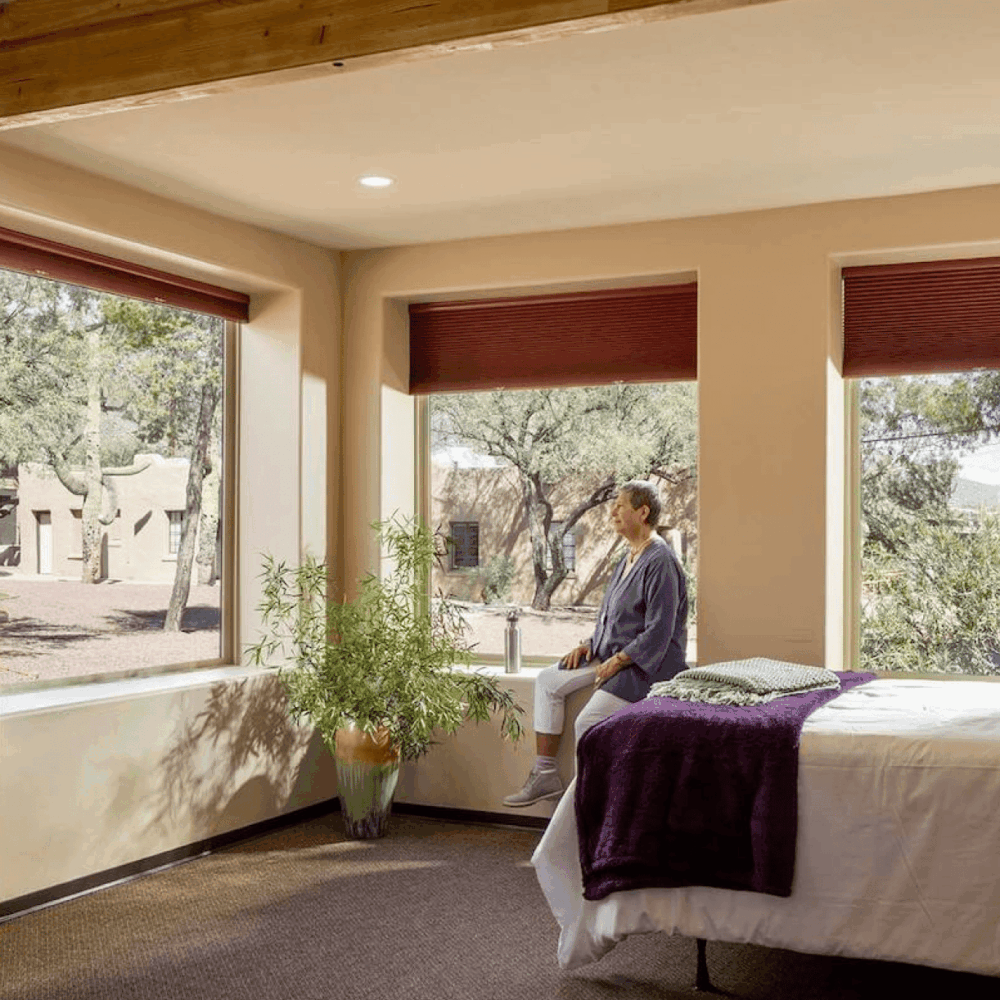
Somatic Centered Therapy is a body-based therapeutic approach that recognizes the connection between physical sensations, emotions, memories, and the nervous system. Rather than focusing only on thoughts or verbal processing, somatic therapy helps clients pay attention to what is happening inside the body.
This may include noticing breath patterns, muscle tension, posture, movement, temperature, numbness, or areas of discomfort. With the support of a trained clinician, clients learn to observe these sensations without judgment and begin building a greater sense of safety within themselves.
Somatic Centered Therapy may be especially helpful for people who feel that trauma is “stuck” in the body, who struggle to describe emotions with words, or who become overwhelmed when trying to process painful experiences through talk therapy alone.
At Sabino Recovery, somatic work is integrated into an individualized treatment plan. It is not a stand-alone technique or a one-size-fits-all method. It is one part of a larger healing process designed to support the mind, body, and nervous system together.
How Somatic Therapy Supports Trauma Recovery
Trauma can affect how the nervous system responds to everyday life. After overwhelming experiences, the body may remain on high alert, even when there is no immediate danger. Some people experience anxiety, panic, irritability, sleep disruption, chronic tension, or a constant sense of unease. Others may feel disconnected, shut down, numb, or detached from their emotions.
Somatic Centered Therapy helps clients understand these responses as adaptations of the nervous system rather than personal failures. The goal is not to force the body to relax or revisit trauma before a person is ready. Instead, somatic work helps clients build capacity for awareness, grounding, and emotional regulation.
Through guided body awareness, breathwork, mindful movement, and grounding practices, clients can begin to recognize signs of activation or shutdown earlier. Over time, this can support a wider “window of tolerance,” meaning the nervous system may become better able to experience emotion, stress, and connection without becoming overwhelmed.
For clients healing from PTSD, complex trauma, childhood trauma, or relational trauma, this body-based approach can help create the internal safety needed for deeper therapeutic work. Somatic therapy may also complement modalities such as EMDR therapy, trauma processing, individual therapy, and mindfulness-based practices.
Nationally Recognized & Accredited




Contact our Admissions Team Today



Somatic Centered Therapy vs. Traditional Talk Therapy
Traditional talk therapy often focuses on thoughts, emotions, behaviors, and personal history. These conversations can be deeply valuable. However, trauma is not always stored or experienced in words. Many people intellectually understand what happened to them but still feel unsafe, reactive, disconnected, or tense in their bodies.
Somatic Centered Therapy works with the body as an active part of healing. A session may include conversation, but it also invites clients to notice physical sensations and nervous system responses in real time.
For example, a client may notice tightness in the chest while discussing a painful memory, a clenched jaw when speaking about boundaries, or a sense of heaviness when exploring grief. Rather than pushing past these responses, the therapist helps the client slow down, observe, and work with the body’s signals in a safe and supportive way.
This can help clients develop:
- Greater awareness of how trauma shows up physically
- Improved emotional regulation and grounding skills
- A stronger sense of connection to the body
- More capacity to tolerate difficult emotions
- Increased self-trust and internal safety
Somatic work does not replace talk therapy. At Sabino Recovery, it often works alongside evidence-informed therapies such as Cognitive Behavioral Therapy, Dialectical Behavior Therapy, and trauma-focused clinical care.
Somatic Therapy For Addiction And Mental Health Treatment in Arizona
Mental health symptoms often have physical expressions. Anxiety may appear as shallow breathing, a racing heart, stomach discomfort, or muscle tightness. Depression may involve fatigue, heaviness, low energy, or disconnection from the body. PTSD may include hypervigilance, startle responses, sleep disruption, or periods of emotional shutdown.
Somatic Centered Therapy helps clients listen to these physical signals with curiosity rather than fear. The body often communicates when the nervous system is overwhelmed, bracing, protecting, or trying to recover. By learning to identify these patterns, clients can begin responding to themselves with more compassion and skill.
At Sabino Recovery, we view these symptoms through a trauma-first lens. We help clients explore the root causes beneath emotional and physical distress while supporting stabilization, safety, and whole-person healing.
Learn more about our approach to mental health treatment and how individualized care can support recovery from anxiety, depression, trauma, and co-occurring challenges.
Techniques Used in Somatic Centered Therapy
Somatic Centered Therapy may include several body-based and mindfulness-based practices. Each technique is introduced with care and adapted to the client’s comfort level, needs, and treatment goals.
Massage therapy at Sabino Recovery is framed as an integrative, supportive service within a broader trauma-informed treatment plan. It is not used to process trauma directly or replace psychotherapy. Instead, it may help clients reconnect with the body, reduce guardedness, and experience safe, consent-based care in a structured clinical environment.
Consent, choice, and clear boundaries are essential. Clients remain in control of their experience, and any body-based work is approached with respect for personal history, comfort, and readiness.
Common somatic practices may include:
- Body awareness exercises to notice sensations, tension, numbness, or areas of ease
- Grounding techniques to support presence and stability
- Breathwork to help regulate activation, anxiety, or emotional overwhelm
- Mindful movement to build connection, flexibility, and embodied awareness
- Posture and alignment awareness to explore how the body protects or responds
- Sensory tracking to help clients notice changes in the nervous system
- Visualization and resourcing to strengthen feelings of safety and support
- Massage therapy, when clinically appropriate, to support relaxation, body awareness, and relief from physical tension
Conditions Somatic Centered Therapy May Support
Somatic Centered Therapy can be helpful for people whose emotional pain is connected to physical symptoms, nervous system dysregulation, or a sense of disconnection from the body.
For individuals navigating both mental health symptoms and substance use, somatic work may be included within a broader dual diagnosis treatment plan. By addressing the nervous system and the root causes beneath coping patterns, clients can begin building a more stable foundation for recovery.
This approach may support clients experiencing:
- PTSD or complex trauma
- Childhood trauma
- Anxiety or panic symptoms
- Depression with physical symptoms such as fatigue or heaviness
- Chronic stress or emotional overwhelm
- Dissociation or feeling disconnected from the body
- Grief, shame, or relational trauma
- Substance use concerns connected to unresolved trauma
- Co-occurring mental health and addiction challenges
Massage Therapy as Part of Somatic Healing
For some clients, trauma and chronic stress are held in the body through muscle tension, restricted breathing, pain, or a persistent sense of bracing. Massage therapy can support somatic healing by helping the body experience rest, release, and grounded awareness.
In a trauma-informed treatment setting, massage therapy is not about indulgence or surface-level relaxation. It is a clinically supportive mind-body practice that may help calm the nervous system, increase awareness of physical sensations, and support a client’s ability to feel present in the body.
This can be especially meaningful for people who have lived in survival mode for a long time. When the body begins to recognize moments of safety, clients may become more available for emotional processing, therapeutic insight, and connection.
At Sabino Recovery, massage therapy is offered with careful attention to consent, communication, and client choice. It may be integrated with other therapies as part of a personalized plan for trauma recovery and nervous system healing


Somatic Therapy for PTSD and Trauma
PTSD can affect how a person feels in their own body. Some people feel constantly alert, tense, or unable to settle. Others feel numb, detached, or disconnected from their emotions. These responses are often signs that the nervous system is trying to protect the person from further harm.
Somatic Centered Therapy helps clients work gently with these patterns. Rather than asking someone to retell painful experiences before they feel ready, somatic work begins with present-moment awareness and regulation. Clients learn how to notice activation, return to grounding, and build tolerance for sensations and emotions.
This can create a safer pathway into trauma recovery. For some clients, somatic work helps prepare the body for deeper trauma processing. For others, it helps rebuild a sense of trust, choice, and connection after years of feeling disconnected from themselves.
Explore our PTSD treatment services to learn more about how Sabino Recovery supports trauma healing.

I am so happy that I chose Sabino to begin my recovery. I have suffered for years from depression, anxiety, panic disorder, and PTSD. The programs that are offered here at Sabino have been truly phenomenal in helping me recover. I also appreciated the professional staff that are here on duty 24/7, which helps create a safe environment. Sabino Recovery uses effective “one on one” methods that meet each person’s individual needs because they evaluate and have a better understanding of your personal traumatic experiences. Thanks Sabino, I am truly grateful to you and the sabino family.
Regina


Integrating Breathwork, Movement, and Awareness
Breath, movement, and body awareness are foundational parts of somatic healing. These practices help clients become more aware of how the nervous system responds to stress, connection, emotion, and safety.
Breathwork may help slow the body’s stress response and support a greater sense of calm. Mindful movement can help clients reconnect with areas of strength, tension, or numbness. Grounding practices can help bring attention back to the present moment when emotions feel overwhelming.
These practices are not about performance. They are about listening. Over time, clients may begin to recognize what their body needs, when they are becoming overwhelmed, and how to return to a more regulated state.
Somatic work may also pair well with Mindfulness Therapy, which helps clients develop present-moment awareness and a more compassionate relationship with their internal experience.

Somatic Therapy Within Residential Treatment
Somatic Centered Therapy is often most effective when it is part of a comprehensive treatment experience. At Sabino Recovery, clients receive individualized care in a calm, private desert setting where they can step away from daily stressors and focus fully on healing.
Within our residential treatment program, somatic work may be combined with individual therapy, group support, psychiatric care, nutrition, experiential therapies, and integrative mind-body options. This allows clients to explore healing from multiple angles while receiving consistent clinical support.
Because every client’s needs are different, care plans are co-created and adjusted throughout treatment. Somatic Centered Therapy may play a central role for one client and a supportive role for another. At Sabino Recovery, the plan is built around the person, not the other way around.
Learn more about our full programs and how our trauma-first model supports whole-person recovery.

Shara Turner, LPC, MSC, NCC, NARM
Shara brings to Sabino Recovery a unique perspective and skill set as she spent the majority of her earlier career in public health working with individuals dually diagnosed with a variety of substance use and mental health disorders, complex trauma, and extreme environmental and social inadequacies. The challenges faced in this arena have provided her with a strong base of practice in assessment, treatment, and case management.
What to Expect in a Somatic Centered Therapy Session
Each session is tailored to the client. Some sessions may include more conversation, while others may focus on body awareness, breathing, movement, or grounding.
You do not need to know how to “do” somatic therapy before beginning. Your therapist will guide the process at a pace that feels safe and manageable. The goal is not to force a breakthrough. The goal is to build trust, awareness, and capacity over time.
A Somatic Centered Therapy session may include:
- A check-in about emotional and physical state
- Gentle guidance to notice sensations in the body
- Breathwork or grounding exercises
- Mindful movement or stillness
- Reflection on how physical sensations connect to emotions or memories
- Nervous system regulation skills
- Integration with other therapeutic work
Is Somatic Centered Therapy Right for You?
Somatic Centered Therapy may be a meaningful option if you feel disconnected from your body, overwhelmed by emotion, or stuck in patterns that have not fully shifted through talk therapy alone.
You are not expected to have all the answers before beginning treatment. At Sabino Recovery, our team helps you explore what feels supportive, what feels safe, and what may help you reconnect with yourself in a sustainable way.
You may benefit from somatic work if you:
- Feel tension, numbness, or discomfort connected to stress or trauma
- Struggle to identify or express emotions
- Become overwhelmed when discussing painful memories
- Feel detached from your body or surroundings
- Experience anxiety, panic, or shutdown responses
- Want to better understand how your nervous system responds to stress
- Are seeking a more embodied approach to trauma recovery
Begin Your Healing Journey with Somatic Centered Therapy
Healing is not only about thinking differently. It is also about learning how to feel safe, present, and connected in your body.
At Sabino Recovery in Tucson, Arizona, Somatic Centered Therapy supports trauma recovery by helping clients regulate the nervous system, reconnect with physical awareness, and build a deeper foundation for whole-person healing. Through compassionate care, individualized treatment, and integrative mind-body support, we help clients move toward greater stability, connection, and hope.
If you are ready to explore whether Somatic Centered Therapy may support your recovery, contact our Admissions team today. We are here to help you take the next step with care, clarity, and respect.