At Sabino Recovery, we firmly believe that the internet should be available and accessible to anyone and are committed to providing a website that is accessible to the broadest possible audience, regardless of ability.
To fulfill this, we aim to adhere as strictly as possible to the World Wide Web Consortium’s (W3C) Web Content Accessibility Guidelines 2.1 (WCAG 2.1) at the AA level. These guidelines explain how to make web content accessible to people with a wide array of disabilities. Complying with those guidelines helps us ensure that the website is accessible to blind people, people with motor impairments, visual impairment, cognitive disabilities, and more.
This website utilizes various technologies that are meant to make it as accessible as possible at all times.
If you wish to contact use please use our online form.
Get Help Today at Sabino Recovery’s Residential Mental Health Treatment Center in Tucson, Arizona
Our website applies accessibility best practices and assistive-technology enhancements to ensure users relying on screen readers and keyboard navigation can fully access and interact with all website content. These improvements include:
1. Optimized screen-reader compatibility by applying ARIA attributes that provide accurate labels, roles, descriptions, and instructions for forms, buttons, menus, popups, and interactive elements.
2. Ensured actionable icons such as social media links, search functions, and navigation controls include meaningful screen-reader descriptions.
3. Implemented automated image scanning to generate accurate alternative (ALT) text for images lacking descriptions, including text extraction through optical character recognition (OCR) when applicable.
4. Enhanced full keyboard operability, allowing users to navigate content using Tab and Shift+Tab, operate menus with arrow keys, close elements with the Escape key, and activate links and buttons using Enter or Spacebar.
5. Enabled accessible interaction with form controls, including radio buttons and checkboxes, using keyboard-only navigation and clear input feedback.
Additional UI, design, and readability adjustments
Our website implements accessibility best practices and behavioral adjustments to ensure users relying on assistive technologies can access, understand, and navigate all content effectively. These improvements include the following:
1. Included alternative (ALT) text where possible for all images, videos, and audio files to ensure meaningful screen-reader descriptions.
2. Provided text transcripts for video and audio content, including educational and CEU-related materials.
3. Identified the website’s primary language within the header code to improve screen-reader pronunciation and interpretation.
4. Ensured all forms provide clear input guidance and validation feedback when users encounter errors.
5. Maintained a consistent, organized layout across all pages to support predictable navigation and readability.
6. Ensured sufficient spacing between website elements to improve readability and usability for screen-reader and keyboard users.
7. Implemented a fully responsive design to ensure accessibility across desktop, tablet, and mobile devices.
8. Ensured font sizes and line spacing remain large and readable across all screen sizes and device types.
Assistive technology and browser compatibility
We aim to support as many browsers and assistive technologies as possible, so our users can choose the best fitting tools for them, with as few limitations as possible. Therefore, we have worked very hard to be able to support all major systems that comprise over 95% of the user market share, including Google Chrome, Mozilla Firefox, Apple Safari, Opera and Microsoft Edge, JAWS, and NVDA (screen readers), both for Windows and MAC users.
Notes, comments, and feedback
Despite our very best efforts to allow anybody to adjust the website to their needs, there may still be pages or sections that are not fully accessible, are in the process of becoming accessible, or are lacking an adequate technological solution to make them accessible. Still, we are continually improving our accessibility, adding, updating, improving its options and features, and developing and adopting new technologies. All this is meant to reach the optimal level of accessibility following technological advancements. If you wish to contact the website’s owner, please use the website’s form
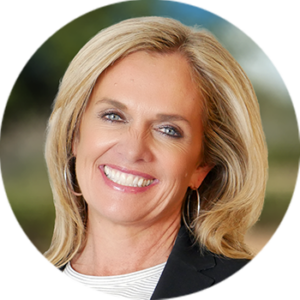
Shara Turner, LPC, MSC, NCC, NARM
Shara brings to Sabino Recovery a unique perspective and skill set as she spent the majority of her earlier career in public health working with individuals dually diagnosed with a variety of substance use and mental health disorders, complex trauma, and extreme environmental and social inadequacies. The challenges faced in this arena have provided her with a strong base of practice in assessment, treatment, and case management.



©2025 Sabino Recovery – All Rights Reserved.
